
SiteVisits&FacilityTours
What This Charter Is
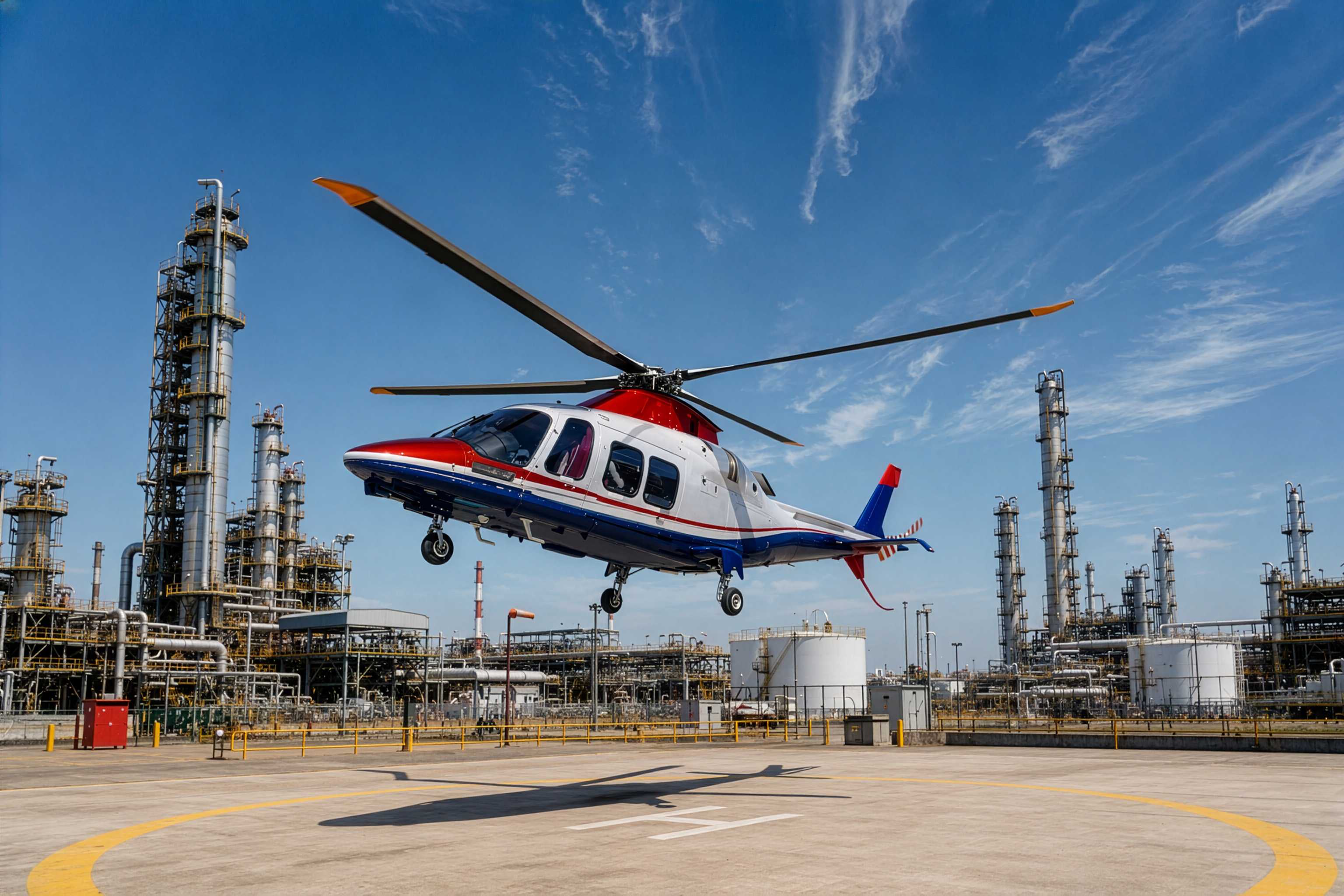
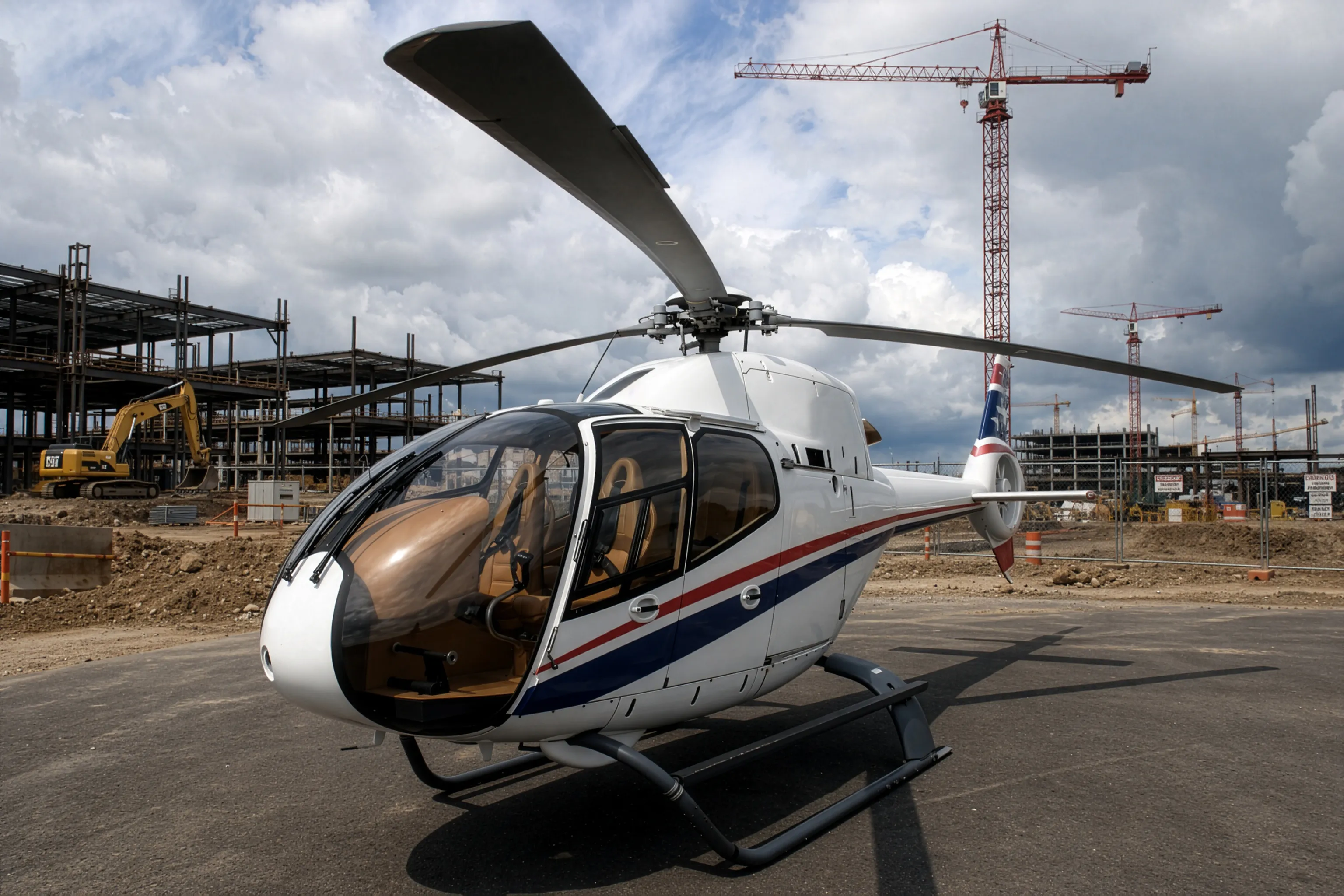
A site-visit charter moves people to a working location: a manufacturing plant, a construction project, a power station, a mine, any facility your team needs to see in person rather than on a slide. What separates it from routine executive travel is the destination. Instead of flying between airports or city heliports, the helicopter lands on the property itself, at an established helipad or at an ad-hoc landing area the site and the operator agree on in advance.
That off-airport landing is the entire case for the charter. Many industrial and energy facilities sit far from any useful airport, and the last ninety minutes of driving is usually the segment that breaks a senior schedule; the helicopter deletes it. Like all on-demand charter in the US, these flights operate under FAR Part 135, and what that framework means for you as a customer is covered in FAR Part 135 for Charter Customers in Plain-English.
If your trip is a straightforward office-to-office or airport-to-city movement, Corporate & Executive Travel is the better starting point.
Who Uses It and Why
- Boards of directors. Facility visits are a standing part of board calendars, and directors’ time is the scarcest resource in the building. A charter turns a plant tour that would consume a travel day each way into a same-day trip.
- Investors and lenders on due-diligence trips. Before a deal closes, someone has to walk the asset. A helicopter charter lets a deal team visit an operating facility, and sometimes two or three in a day, without building the trip around airline schedules.
- Project owners and executives at milestone inspections. Groundbreakings, topping-outs, commissioning, and turnarounds all pull senior people to construction and project sites that rarely sit near convenient airports.
- Management teams running multi-site operations. Regional leadership responsible for several facilities can tour them in a circuit rather than losing days to highway miles between sites.
How a Typical Flight Works
The flight itself is usually the easy part; the real work is coordination with the destination site, starting well before travel day.
Confirming a landing area. The operator needs to know where on the property the helicopter will land, and someone at the site has to own that answer. Expect requests for the area’s dimensions, surface, slope, surroundings, and approach and departure paths, backed by photos, GPS coordinates, or a site diagram; the operator’s pilot makes the final suitability call. Wires and poles are the classic hazard at industrial and construction sites, hard to see from the air and exactly what this review is meant to catch. Treat landing-area selection as a real workstream with a named person at the site who signs off on the spot.
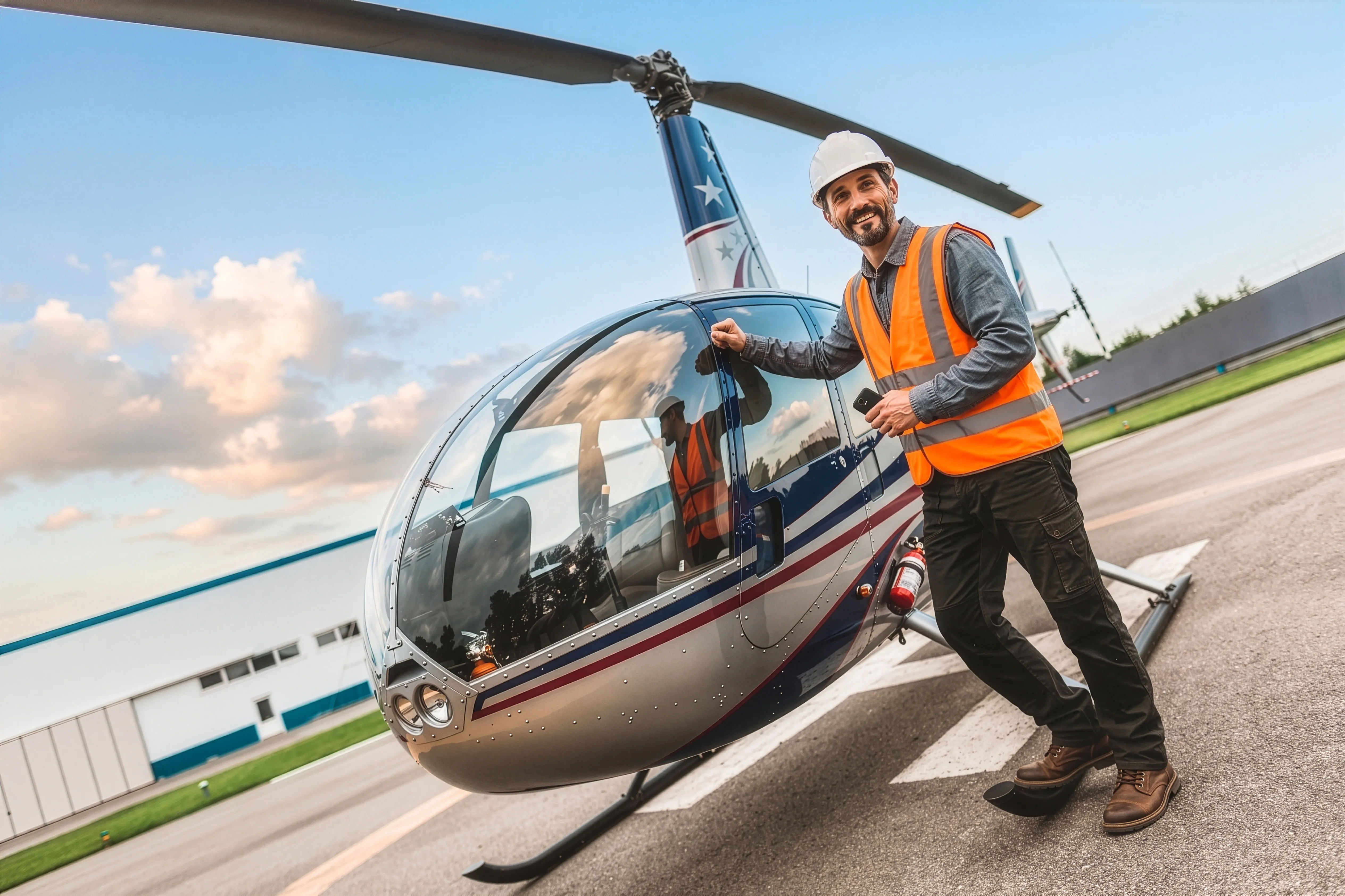
The day of the flight. Passengers board at an airport, heliport, or other agreed departure point and fly directly to the site. On arrival, the helicopter exempts no one from site rules: many industrial and energy facilities require a visitor safety briefing, PPE such as a hard hat, hi-vis vest, and safety glasses, and an escort for the visit. The crew coordinates where passengers deplane and where the aircraft waits or shuts down.
The visit and departure. Depending on the plan, the helicopter waits on site or repositions and returns at an agreed time; departure is coordinated the same way the arrival was.
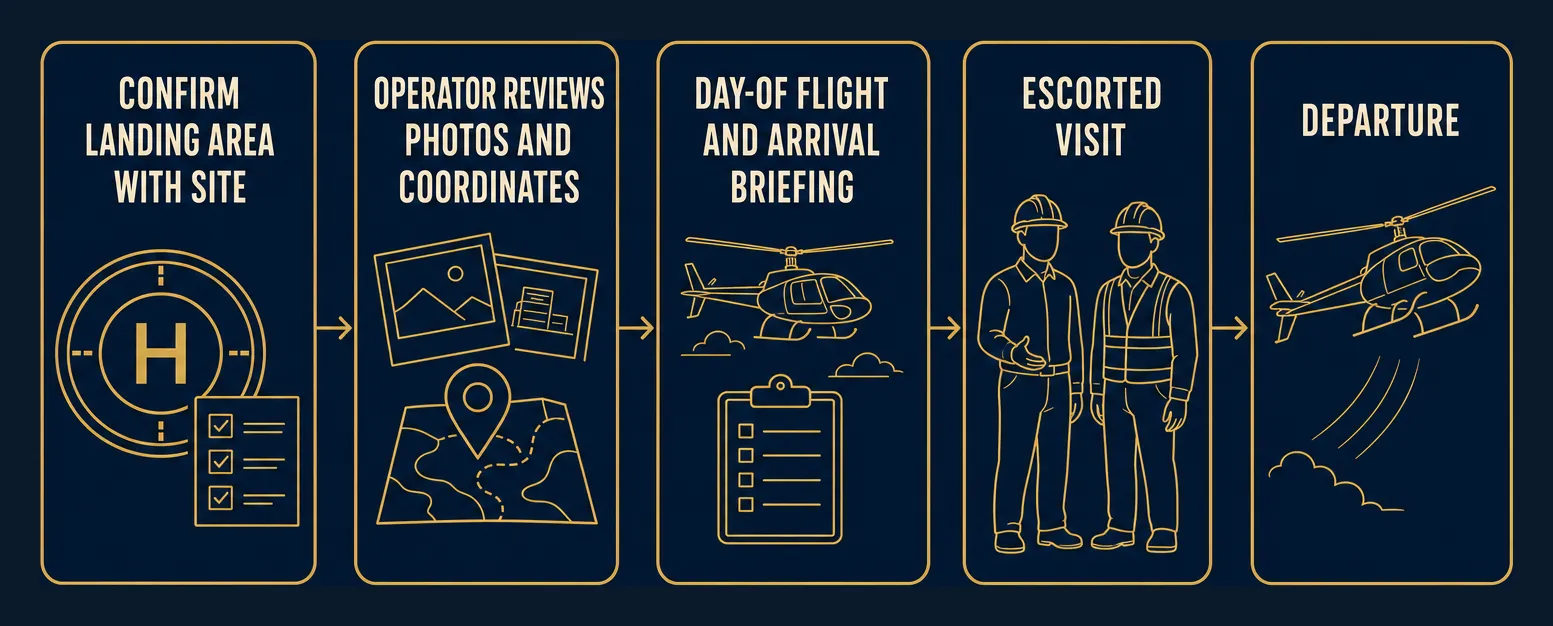
Coordination with the destination site, from confirming the landing area through the escorted visit and departure, is a scheduled workstream, not an afterthought.
Aircraft Typically Used
The trade on a site visit cuts differently than on city work: the landing area is often the binding constraint, and smaller aircraft use smaller areas. For teams of two to four, a light single-engine helicopter in the H125 or Bell 407 class is the usual answer: the economical class, able to use modest landing areas, well suited to short and medium legs. A light or medium twin in the AW109 or S-76 class is the step up when the group is larger, or when the party wants a quieter cabin and twin-engine reassurance; the price of that comfort is a more demanding landing footprint. The operator matches the aircraft to party size, baggage, and the landing area the site can actually offer, so an honest passenger count early saves an aircraft swap later. The class trade-offs are covered in the Helicopter Class Comparison Guide.
Planning Considerations
Weather
Helicopters handle wind and rain better than most people expect, but low cloud, fog, and thunderstorms stop them like any aircraft. A facility visit has a fixed audience, so build a fallback: a backup date, or a ground plan that salvages the day if the flight scrubs. The Weather, Delays & Scheduling FAQ covers how operators make these calls.
Landing Sites
Hospitals, offshore facilities, some refineries, and corporate campuses maintain marked, surveyed helipads, and using one is close to routine. An ad-hoc area, a cleared pad or a field beside the plant, is workable only after the review described above; the site keeps it clear of vehicles, equipment, and loose material on the day, and the person who approved the spot stays reachable.
Luggage and PPE
Site visits travel light, but PPE changes the packing math. Hard hats, vests, and boots brought by visitors ride as baggage, and baggage space in a light helicopter is limited. Many sites keep visitor PPE on hand; confirming that in advance beats discovering a weight or space problem at departure. Tell the operator what the party is carrying.
Lead Time
A flight to a facility with an established helipad and a history of helicopter arrivals comes together quickly. A first-time landing cannot: photos must be reviewed, a landing area chosen and approved, and the site’s safety and security staff brought into the loop. Start the conversation weeks ahead, not days. Repeat visits get much easier, because the landing-area work only happens once.
When a Helicopter Is the Wrong Answer
Some site visits should happen by car. If the facility sits within an easy drive of where the party starts, a helicopter adds cost and coordination without saving meaningful time. If there is no safe landing area on or near the property and the nearest acceptable spot still requires a long ground leg, the advantage shrinks fast. And if the host site is unwilling to coordinate, to provide photos, approve a landing area, or clear it on the day, the visit should go by ground regardless of the budget. A helicopter earns its keep when the site is genuinely remote, the schedule genuinely tight, and the host genuinely on board.
Cost Factors
No two site-visit charters price the same, but the variables behind the number are consistent: aircraft class, total flight time including positioning legs, waiting or standby time during the visit, and whether the itinerary covers multiple sites in one day. Site coordination itself is rarely a line item, but a difficult landing area can influence aircraft choice, which is. The full breakdown is in What a Charter Costs: Framework, Not Quotes.
Frequently Asked Questions
Can a helicopter land anywhere on our property?
No. The pilot and operator decide where a landing is safe, based on size, surface, slope, obstacles, and wires; their answer, not the site’s preference, is final.
Who is responsible for the landing area?
The site proposes and prepares it; the operator approves it. The site names someone who owns the answer, keeps the area clear on the day, and stays reachable.
What happens if weather cancels the flight?
It is postponed or scrubbed like any charter. Because site visits gather people around a fixed agenda, agree on the fallback, a backup date or a ground plan, before the day arrives.
Do our executives need PPE to step out of a helicopter?
Whatever the site requires of any visitor. Arriving by air changes nothing about hard-hat, hi-vis, or escort rules, and the site’s safety briefing still applies.
How far ahead should we start planning?
For an established helipad, a short runway of planning is often enough. For a first-time ad-hoc landing, allow weeks for the landing-area review and site approvals.
Related Charters
- Corporate & Executive Travel: routine point-to-point business flying when the destination is an airport, heliport, or office rather than a working site.
- Multi-City Roadshows: when the itinerary is a sequence of stops and the aircraft stays with the party all day.
- Airport Transfers: connecting an airline flight to a final destination without ground traffic.
- Executive & Business Charters: how the executive charters differ and which one fits your trip.