
WeekendGetaways
What This Charter Is
A weekend getaway charter is a round trip built around the two most wasted stretches of a leisure weekend: getting there on Friday and getting back on Sunday. You hire the whole helicopter and crew to lift you from near home or the office to the coast, the mountains, or the lake, and bring you back when the weekend ends. The Friday gridlock slides by beneath you instead of surrounding you, and Sunday keeps its afternoon. The flight operates under FAR Part 135, the federal framework for on-demand air carriers, explained in FAR Part 135 for Charter Customers.
That is the general destination weekend: a house, a lodge, a resort town, a friend’s place by the water. Trips built around a specific activity work a little differently, since golf bags and resort logistics shape the aircraft choice in Golf & Resort Charters, and a weekend that is really a long lunch with a flight attached belongs to Winery & Restaurant Charters.
Who Uses It and Why
The typical customer is an individual or couple who makes the same trip regularly and knows exactly what the drive costs them. The common thread is a destination far enough away that the road eats the weekend: leave work Friday, arrive after dark, turn around Sunday after lunch.
The value case is simple drive-versus-flight arithmetic. A trip that runs three to five hours each way by car on a summer Friday is often around an hour in the air, because the helicopter flies the straight line the road cannot and skips the traffic entirely. That turns a Friday lost to traffic into a Friday evening at the destination, and a Sunday cut short into a full last day. The helicopter also reaches the places the road serves worst: islands, mountain valleys, and lake country where the last miles are the slowest.
How a Typical Flight Works
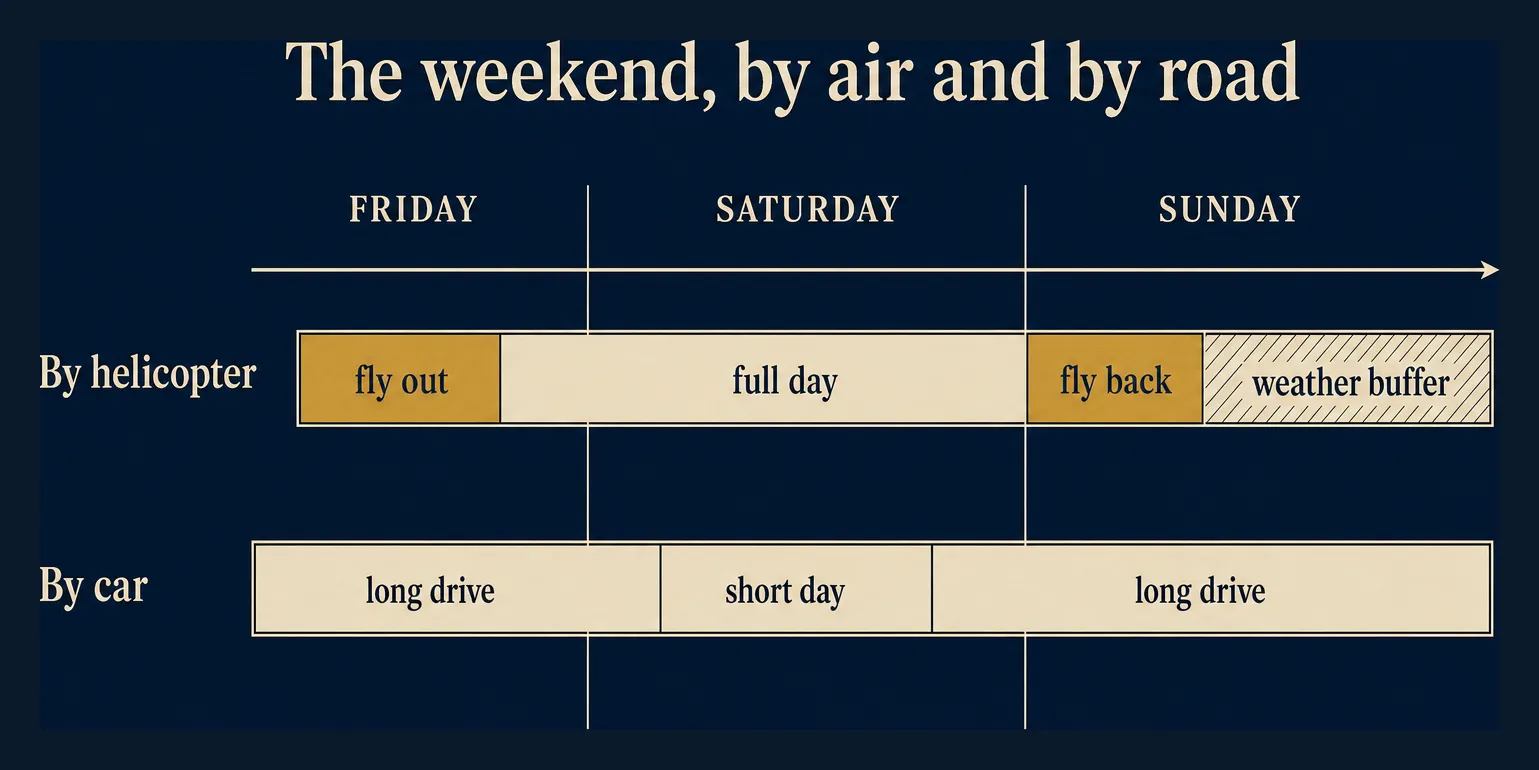
The standard pattern is Friday out, Sunday back. You finish work, reach a nearby heliport, and lift off in the early evening while the highways below are at their worst. Friday afternoon is the congested slot on both modes, which is exactly when the helicopter’s advantage is largest: flight time barely changes while drive time swells. Saturday is a full day because neither end of it was spent traveling, and Sunday you fly back with a buffer built in.
The alternative is a Saturday-morning departure: it costs you Friday evening at the destination but buys wider daylight margins and a simpler crew day. Departure flexibility is what unlocks this charter: sliding the flight two hours either way is usually free in planning terms and can decide whether the trip flies at all.
The mechanics could hardly be simpler: arrive shortly before the flight, the crew loads your bags, and you are airborne within minutes. The diagram below shows where the recovered hours come from and where the Sunday weather buffer sits.
Aircraft Typically Used
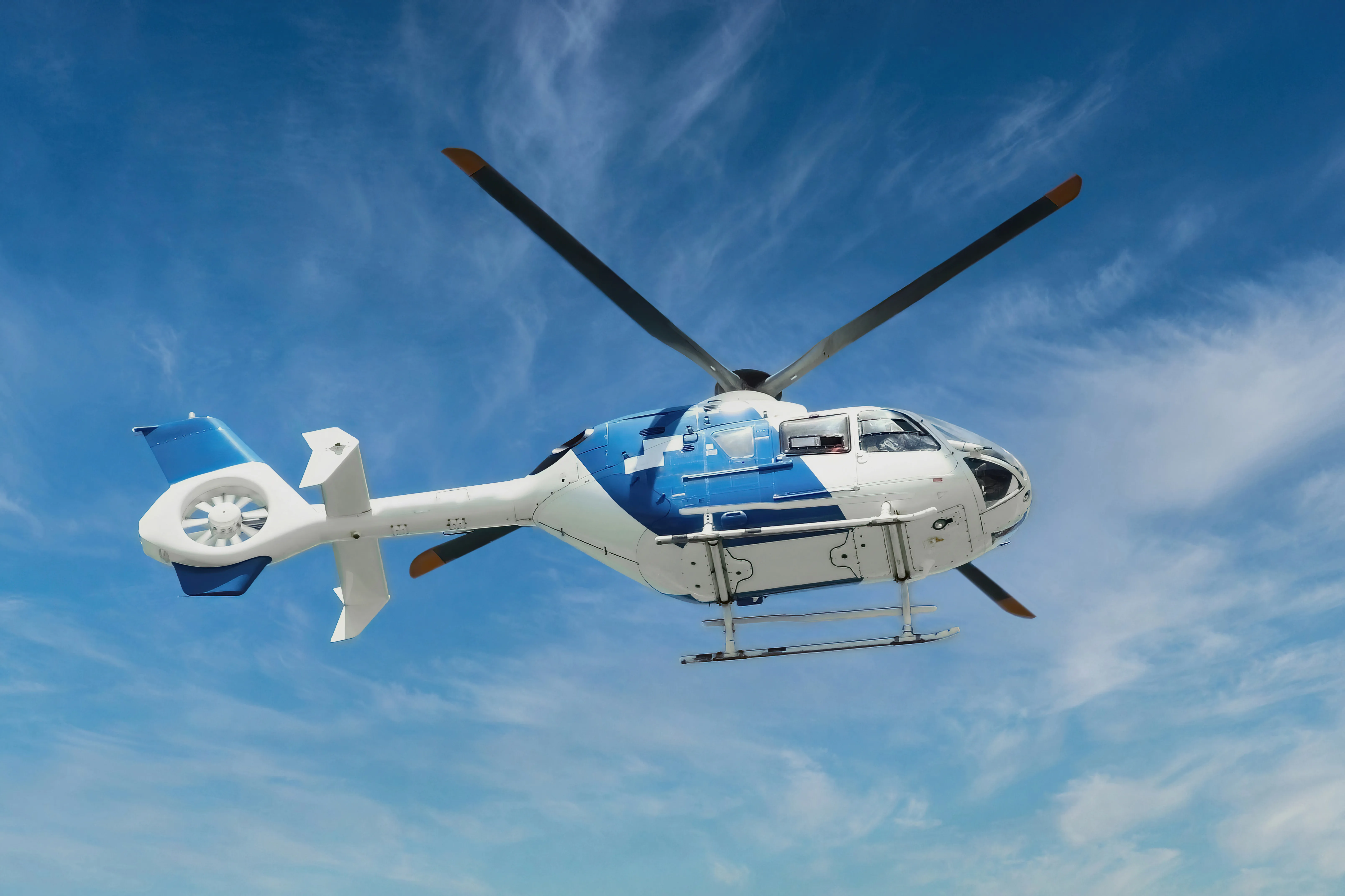
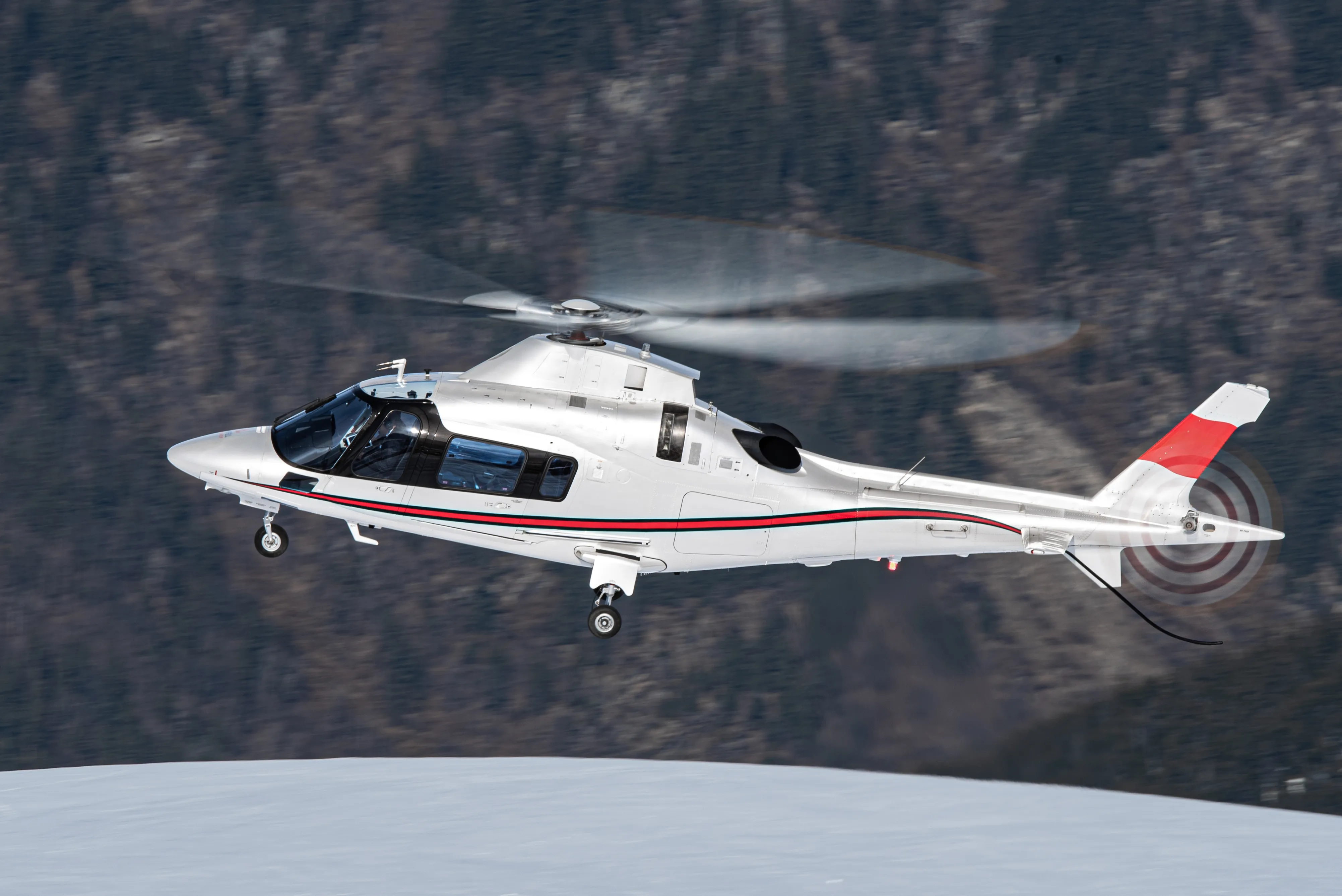
For a couple with two soft bags, a light single-engine helicopter is the workhorse: economical, comfortable for legs of an hour or so, and able to use small landing sites. When the party grows, the bags multiply, or the route crosses water or high terrain, operators step up to a light twin or larger, which adds seats, baggage room, and a second engine’s margin. The class-by-class trade-offs are laid out in the Helicopter Class Comparison Guide. The honest rule: passengers plus bags drive the choice, not preference.
Planning Considerations
Weather
The outbound leg rarely decides the trip; the return leg does. Sunday evening has a hard deadline, because Monday morning does not move, and weather over the destination or the route home can close that window. Plan the return with a buffer: a Sunday-afternoon departure rather than a dusk one, and a decision point in the morning. If weather closes in, the realistic options are to wait it out and fly early Monday, leave earlier while the window is open, or fall back to the car or an airline seat. The mechanics of forecasts, minimums, and delay decisions live in Weather, Delays & Scheduling FAQ and are not repeated here.
Landing Sites
Weekend destinations run the full range: public heliports in resort towns, private pads at houses and lodges arranged with the operator in advance, and regional airports with a car for the last leg. What makes a site legal and usable is its own subject, covered in Heliports & Landing Zones. Tell the operator where the weekend property is and let them confirm the landing option before you plan around it.
Luggage and Passengers
A weekend’s luggage is usually friendly: one soft duffel per person fits a light helicopter’s baggage compartment, and soft-sided bags are strongly preferred over hard cases. Weight and balance is computed for every flight, so give the operator honest passenger and bag weights; on a small aircraft the margin is real and the allowance varies by airframe. Two people with duffels is easy; four people with a week of gear, coolers, and a dog crate is a different mission that may push you up a class. Sports equipment that drives aircraft choice, golf clubs being the classic case, is covered in Golf & Resort Charters.
Lead Time
A repeat trip to a known landing site can often be arranged on short notice; a first trip to a new property takes longer while the operator verifies and arranges the landing site. Holiday weekends and peak season compress availability on popular leisure corridors, so the regulars book the season’s weekends in advance and adjust as plans firm up.
When a Helicopter Is the Wrong Answer
Candor first: many weekend trips should be driven. If the destination is ninety minutes away on an uncongested road, the helicopter saves little and costs much. If your Sunday evening cannot flex at all, a poor weather season turns the return leg into a recurring gamble, and a car that definitely gets you home beats an aircraft that might not. If the group’s luggage blows the weight budget for any aircraft that fits the budget, the trip does not work as flown. And if the weekend is really about the flying itself, book that instead: Scenic & Sightseeing Charters is the page for the flight as the experience.
Cost Factors
What a Charter Costs: Framework, Not Quotes explains how to read a quote. What drives a weekend getaway specifically: aircraft class, since a twin costs more per hour than a light single; round-trip flight time plus any repositioning to reach you; and how the operator handles the gap between Friday and Sunday. An aircraft and crew that stay at the destination tie up the machine all weekend; one that drops you and returns later flies the route twice each way. Landing or facility fees at the destination and crew expenses on overnight stays round out the picture.
Frequently Asked Questions
How much time does a helicopter actually save on a weekend trip?
It depends on the route, but the pattern is remarkably consistent: leisure corridors are slowest exactly when you want to travel. A drive of three to five hours in weekend traffic commonly becomes roughly an hour in the air. Ask the operator to run your actual route both ways before you assume the saving.
What happens if weather cancels the Sunday return?
The aircraft does not fly below the operator’s minimums, full stop. The realistic fallbacks are waiting for a Monday-morning window, departing earlier on Sunday while conditions allow, or driving or flying commercially. This is why the return leg gets a buffer, and why Monday-morning flexibility matters most.
How much luggage can two people bring?
A soft duffel each plus small items is comfortable on a light single; hard cases load poorly, and total weight matters as much as volume. Give the operator an honest count and they will tell you whether it fits or needs a larger class.
Related Charters
- Scenic & Sightseeing Charters: when the flight itself, not the destination, is the reason to book.
- Special Occasions & Proposals: celebration flights where the moment matters more than the itinerary.
- Golf & Resort Charters: trips built around a tee time, including the sports-luggage problem.
- Winery & Restaurant Charters: destination dining flights, the day-trip cousin of this charter.
- Sporting Events & Concerts: event arrivals where someone else’s start time fixes the schedule.
- Leisure & Recreational Charters: how the leisure charters differ and which one fits your occasion.