
Golf&ResortCharters
What This Charter Is
A golf or resort charter means hiring a helicopter and crew to fly you to a course or resort that is the whole point of the trip. It is not a scenic loop or an airport transfer: the destination is the tee time, the spa weekend, or the resort itself. Picture leaving after breakfast, watching the fairways line up beneath you where the highway would have been, and playing a full round with the drive home already solved. Every flight is a whole-aircraft charter under FAR Part 135, covered in FAR Part 135 for Charter Customers in Plain-English.
Planning revolves around two fixed points: a tee time or check-in that does not move, and a landing site that may or may not exist at the property. Everything else bends around those two.
Who Uses It and Why
Golf groups are the classic case: a foursome flying to a resort course two or three hours away by road, playing eighteen, and coming home the same evening. Couples book resort anniversaries and spa weekends, though trips where the resort is one stop among many belong to Weekend Getaways. Assistants arrange these trips for principals and clients, often paired with a restaurant booking, a close cousin of Winery & Restaurant Charters.
The appeal is consistent: a helicopter converts a half day of driving into an hour of flying, reaches island, mountain, and desert resorts with no practical airport nearby, and lets a group play a full round and still sleep in their own beds.
How a Typical Flight Works
The same-day pattern is the favorite. You lift off from a home heliport or nearby airport in the morning, land at the resort’s helipad or the closest public heliport, play, and fly back late afternoon. The return leg is the constraint: it has to fit inside daylight and a workable weather window, so a slow round puts pressure on the departure. Your operator builds the schedule backward from sunset and forecast, not forward from your tee time.
The overnight pattern works differently. The helicopter drops you at the resort and either stays on site with the crew or heads home and comes back for you days later. An aircraft that waits ties up machine and crew; one that ferries back flies the route four times instead of twice. Both price differently, covered under Cost Factors below.
Landing at the property is the piece that takes coordination. Some resorts and clubs run their own helipads and handle arrivals routinely. Others permit landing only by prior arrangement, and some have no landing option at all, in which case you land at a nearby heliport and take a short ground transfer. The operator, not you, talks to the property; the mechanics are covered in Hotel Transfers and apply here unchanged.
Aircraft Typically Used
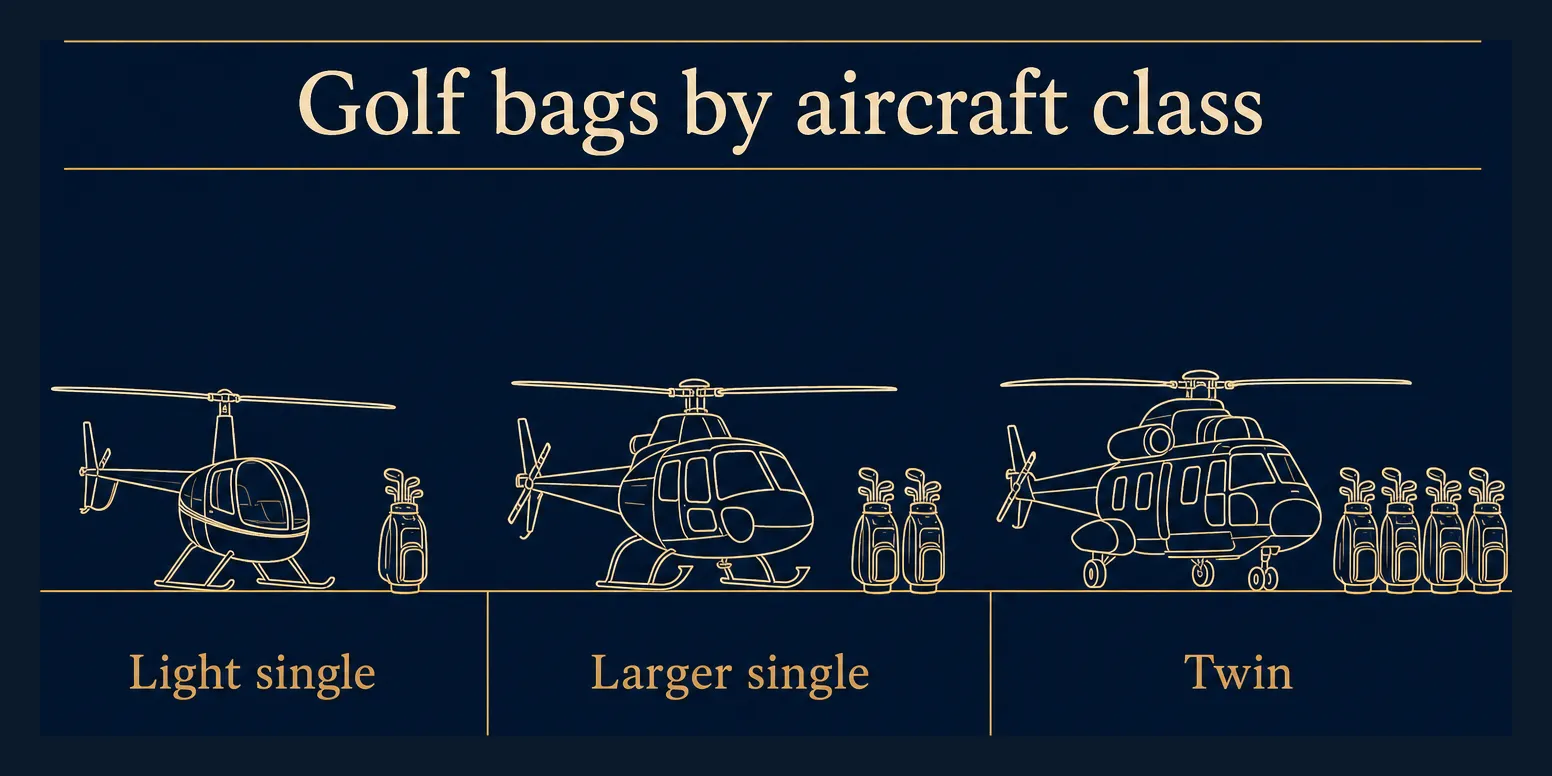
Golf trips have a luggage problem, and it catches first-timers off guard. A full set of clubs in a bag runs roughly 25 to 35 pounds and close to four feet long, one of the bulkiest common items a light helicopter is ever asked to swallow. Four passengers with four bags is a genuine load, and on a light single it can brush against useful load even when there are seats to spare.
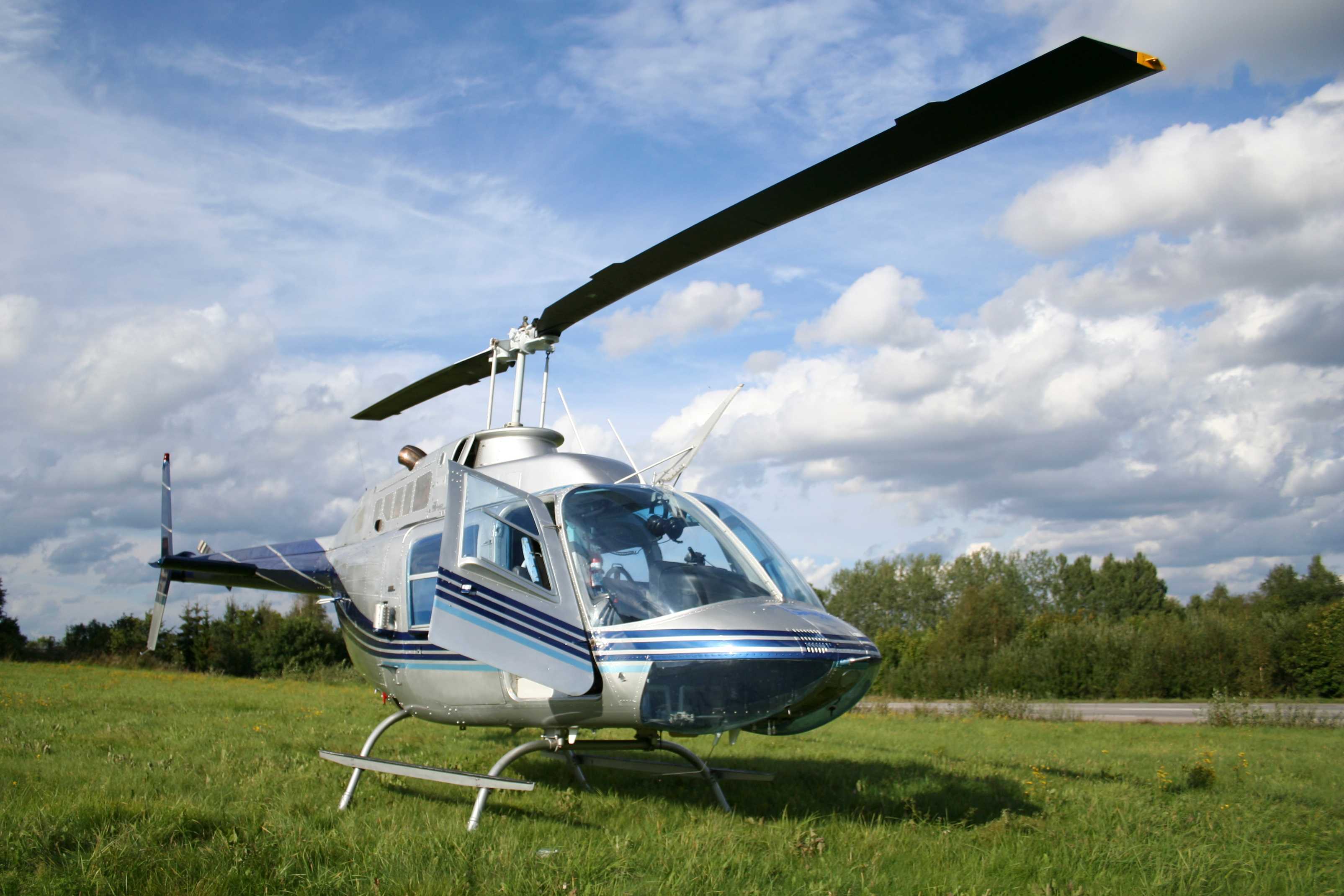
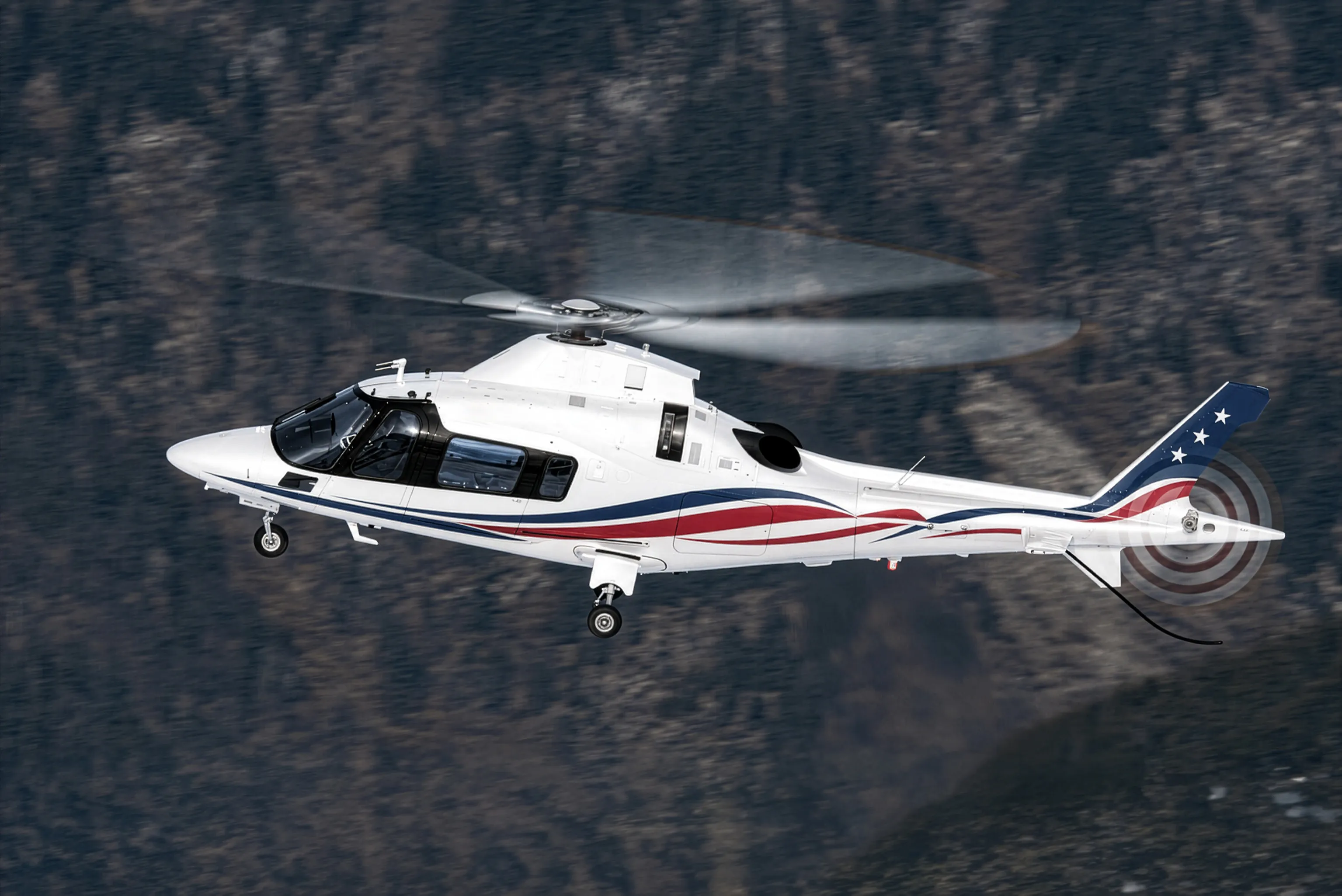
Light singles such as the Robinson R44 and R66 or the Bell 206 class are the economical answer for one or two passengers with bags. Some offer external baggage compartments, which help with the bag’s long, awkward shape, though those compartments carry their own weight limits. For a full foursome with clubs, the practical move is a larger single such as the Bell 407 or Airbus H125 class, or a light twin, where seats and baggage room stop competing.
Treat any seat count or payload figure as a planning range rather than a specification. The operator confirms the real numbers against the aircraft flying your trip and the weights walking up to it. The Helicopter Class Comparison Guide covers the classes in more detail.
Planning Considerations
Weather
A tee time does not move, and a helicopter cannot outfly a weather system. Night flying raises the bar on the operator, the aircraft, and the crew, so evening return legs get planned conservatively around daylight. If the forecast looks marginal, decide early whether the trip still makes sense, and read Weather, Delays & Scheduling FAQ before you book.
Landing Sites
Three cases cover nearly everything: the resort has its own helipad; it permits landing by prior arrangement, which the operator coordinates; or there is no landing option, and you land at a public heliport nearby with a short car transfer. Ask any operator which case your destination falls into first, because it shapes the schedule, the cost, and sometimes whether the trip works at all.
Luggage and Passengers
Count honestly, clubs and all. Four adults, four golf bags, and overnight luggage is a different mission than four adults with carry bags, and it may dictate a larger aircraft or rule the trip out for a light single. Give the operator real weights for passengers and bags; weight and balance is computed for every flight.
Lead Time
A trip to a resort with an established helipad can come together quickly; a first-time landing at a private club takes longer because the operator has to coordinate with the property before confirming. Tournament weeks and holiday weekends compress availability, so book early.
When a Helicopter Is the Wrong Answer
Plenty of golf trips should be driven. If the course is an hour or two away by highway, a car wins on cost and reliability. If the property has no viable landing site and the nearest heliport still leaves a long ground leg, the time saving can evaporate. If the day is weather-marginal and the tee time is immovable, the helicopter adds risk instead of removing it. And if the group is a foursome with full bags but the budget only stretches to a light single, the payload math simply does not close. A good operator will tell you which of these applies before you spend anything.
Cost Factors
Cost scales with flight time and aircraft class, so distance and the helicopter size your bags and party dictate are the two big levers. Same-day trips add waiting time or a second round trip; overnight stays add crew expenses and aircraft downtime or two extra ferry legs. Some resorts and heliports charge landing or facility fees. What a Charter Costs: Framework, Not Quotes walks through the structure in full.
Frequently Asked Questions
Can the helicopter land right at the clubhouse?
Sometimes, and it is a fine way to arrive. Resorts and clubs with their own helipads do this routinely. Elsewhere it depends on property permission, which the operator arranges, or it is a nearby heliport plus a short drive. Assume nothing until the operator confirms.
How many golf bags fit in one helicopter?
It depends on class. A light single realistically handles one or two bags alongside passengers, a larger single two or three, and a twin four or more, all subject to total weight.
What happens if weather cancels the return leg?
You stay the night or take ground transport, and the aircraft returns when conditions allow. Operators plan conservatively to avoid this, but it cannot be eliminated, so remote same-day trips deserve an evening backup plan.
Is a same-day round trip realistic for eighteen holes?
Usually yes, if the schedule is built backward from daylight and weather rather than forward from the tee time. Early departures and a realistic pace of play keep the return leg comfortable.
Can we play two courses in one day?
Often, and it is one of the best tricks in the book: course one in the morning, course two after lunch. Each extra landing site adds coordination and cost, so raise it when booking.
Related Charters
- Scenic & Sightseeing Charters: when the flight itself is the reason for booking.
- Special Occasions & Proposals: celebration flights where the moment matters most.
- Winery & Restaurant Charters: the same trip shape when the destination is a table rather than a tee.
- Sporting Events & Concerts: event arrivals fixed by someone else’s start time.
- Weekend Getaways: leisure trips where the resort is one stop among several.
- Leisure & Recreational Charters: how the leisure charters differ and which one fits your occasion.