
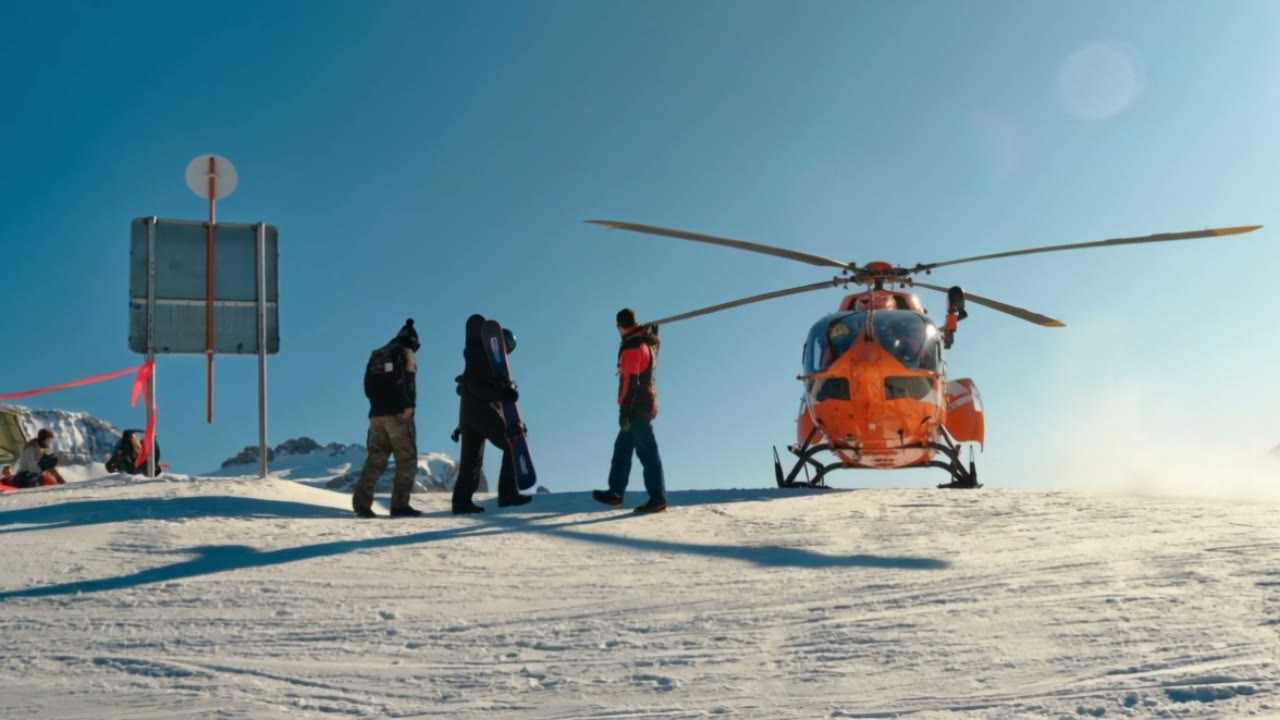
Heliskiing
The lift line is a helicopter
Heliskiing is the simplest trade in skiing: swap the chairlift for a helicopter and the groomed run for a mountain nobody has touched since the last storm. The aircraft climbs in minutes what a skin track climbs in hours, sets you down on a ridgeline the resort maps do not reach, and is waiting again at the bottom while your legs are still shaking from the best run of your life.
It is also the deepest deep dive in leisure flying. A scenic charter asks nothing of you but a window seat. Heliskiing asks for real skiing, real fitness, real listening, and real respect for terrain that does not care how the day was supposed to go. This page walks the whole arc: how a day runs, what the backcountry actually is, what you carry, how the safety system works, and what moves the cost.
How a heliski day runs
The day starts indoors, not at the aircraft. Guides brief the group on the plan, the snowpack, and the terrain menu for the day, then run the safety session: how to approach and leave the helicopter, how the avalanche transceiver on your harness works, and what happens if the plan changes mid-day. Expect a practice search before anyone flies. A serious operation treats the briefing as a gate, not a formality.
Then the rhythm begins: a short flight to the top of a run, a controlled unload while the aircraft holds on the snow, the ship lifting away into quiet, and the run itself. At the bottom the helicopter is inbound again, the group loads, and the cycle repeats. A strong day is a stack of these cycles with lunch on a ridge somewhere in the middle. The helicopter does not follow a fixed circuit; guides call runs all day based on what the snow, the light, and the group are doing.
What backcountry actually means
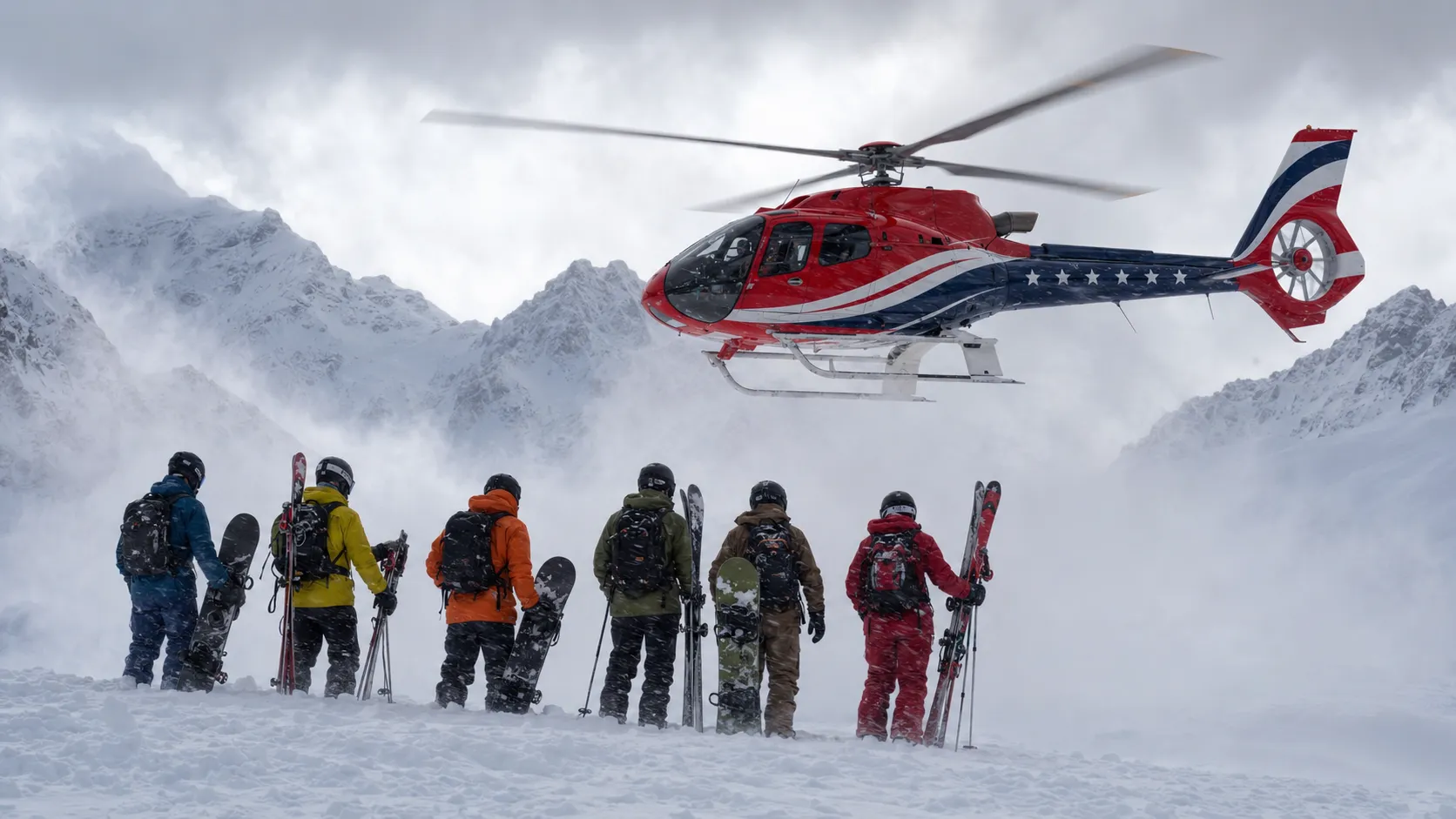
Everything past the resort boundary is unpatrolled, uncontrolled, and unmarked. Nobody has compacted the snowpack, blasted the cornices, or roped off the terrain traps. That is the whole appeal, and it is the whole risk. The snow that makes the skiing famous, deep, dry, and untracked, is the same snow that can avalanche, and the difference between a great line and a dangerous one is a judgment call made by people who read snow for a living.
That is why heliskiing is guided, full stop. The guides choose the terrain, set the track, and decide where you stop and regroup. Their instructions are not suggestions; on a glacier or above a convexity, skiing past the guide is how good days become rescue stories. If you are used to skiing wherever your legs take you, the discipline takes an hour to accept and then it disappears into the rhythm.
What you bring, and what you wear
The operation supplies the specialized kit: an avalanche transceiver, and in most cases an airbag pack carrying a probe and shovel. Fat powder skis or a board suited to deep snow are usually available too, and unless you own true powder gear, use theirs. Your job is the layers: a proper shell, warm mid-layers, goggles plus a spare, mittens or gloves you trust, and sunscreen for glacier light. Skip cotton, skip the racecarve skis, and skip anything you cannot move in all day.
Two practical notes. Helicopters care about weight, so the operator will ask for honest body weights at booking; the aircraft’s load math is built on them. And pack light: the cabin has room for people and safety gear, not resort luggage. Everything else stays at the lodge.
Fitness and ability, honestly
You do not need to be a professional. You do need to be a confident advanced skier or rider who is comfortable on ungroomed snow all day at altitude. Deep powder in the trees at eleven in the morning is a workout; the fourth run after lunch is where fitness shows. If your last ten days were groomers, spend a day or two in resort powder and moguls before you go. Groups ski at the pace of their most tired member, and the honest self-assessment you give the operator at booking is what puts you in the right group.
The safety system
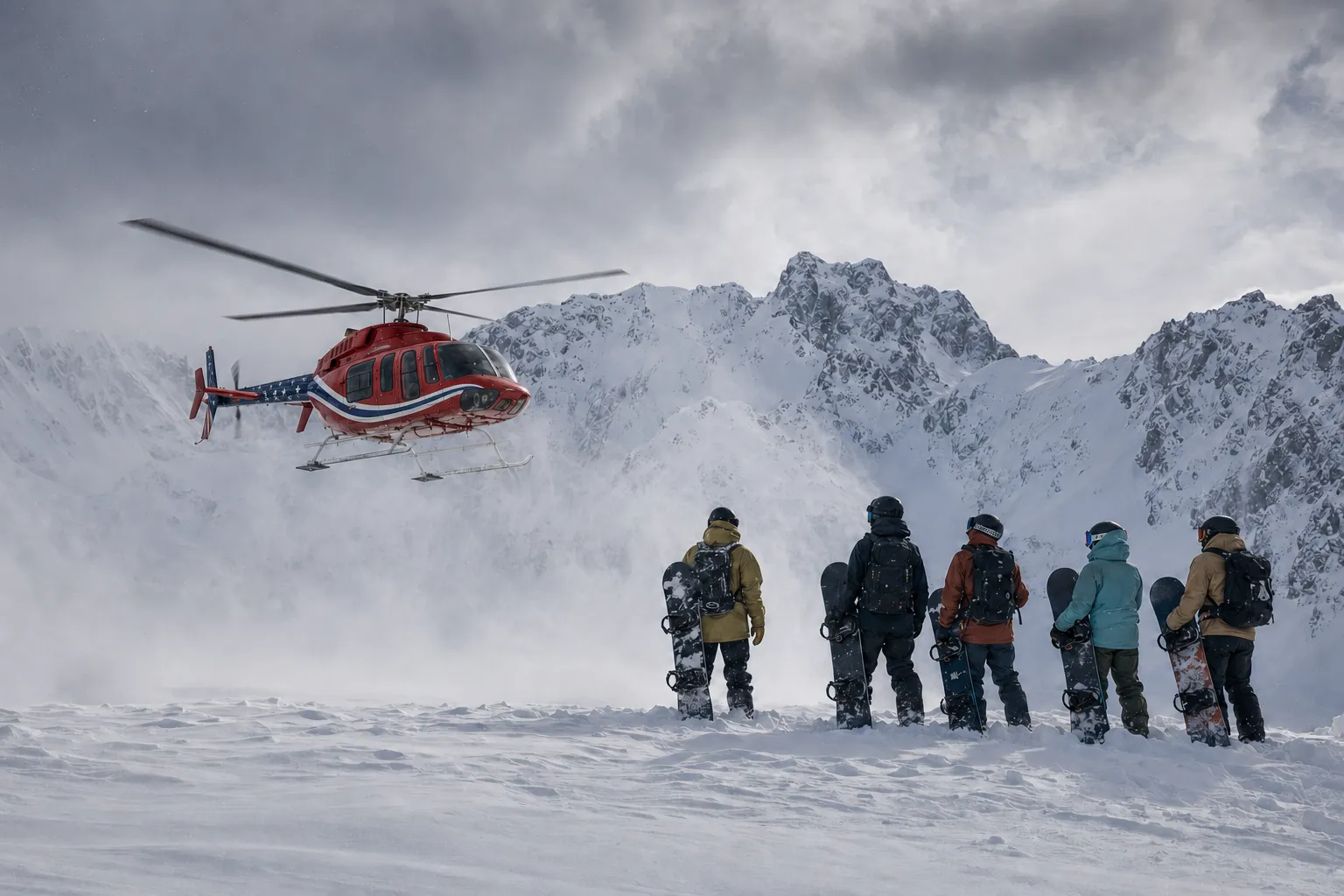
Heliski safety is layered, and every layer is boring on purpose. Guides run avalanche forecasting from snowpack observation, weather history, and test results, and the day’s terrain menu is chosen inside that picture. The transceiver briefing and practice search exist so that the worst case has a practiced response. Around the aircraft, the rules are absolute: approach and leave only where the crew directs, stay low under the disc, and never go near the tail. The helicopter side of the day runs under FAR Part 135 like every charter here, with the operator’s own mountain-flying limits on top; the customer’s view of those rules is in FAR Part 135 for Charter Customers in Plain-English.
The honest sentence about risk: guiding, forecasting, and equipment shrink the danger enormously, and they do not erase it. Backcountry skiing carries real risk that no operation can remove. A good operator says that plainly and shows you the system they run instead of waving the question away.
Weather days are part of the sport
Mountain weather grounds helicopters more often than skiers expect: flat light, wind on the ridgelines, storms that are busy building tomorrow’s powder. Multi-day trips are built around this; down days are normal, and the powder they produce is why you came. Ask any operator two questions before booking: how do down days affect what I pay, and what does the group do when the ship cannot fly. The answers tell you a lot about the operation. The wider weather picture for all charter flying is in Weather, Delays & Scheduling FAQ.
Cost factors
The variables behind any charter quote are in What a Charter Costs: Framework, Not Quotes. What shapes heliskiing specifically: helicopter time is the engine of the price, so more runs means more flying; group size matters because the aircraft costs the same whether three or five ski it; remote terrain adds positioning and staging; and multi-day packages fold in lodging, guides, and gear. Weather policies matter as much as the number, so read how unflown days are handled before comparing anything.
Frequently Asked Questions
Do I need avalanche training to go heliskiing?
No. Guided operations brief you and supply the equipment. Training is never wasted, and returning guests often take an avalanche course because the backcountry gets under your skin, but the day is built so first-timers can do it safely inside the guided system.
How good a skier do I have to be?
Confident and advanced on ungroomed snow, with the fitness to repeat it all day at altitude. You do not need to be an expert; you do need to be honest at booking so the operator groups you well.
What happens if the weather grounds the helicopter?
The group waits, skis close terrain if the operation has it, or banks the day per the operator’s weather policy. Down days are part of the sport, and the policy for them belongs in writing before you book.
Can snowboarders come?
Almost universally, yes. Deep snow rewards a board; the briefing and the aircraft rules are identical either way.
Is the helicopter part the dangerous part?
The flying runs under the same federal charter rules as every flight here, flown by crews who work mountains for a living. The risk that deserves your respect is the terrain, which is exactly what the guiding system exists to manage.
Related Charters
- Scenic & Sightseeing Charters: the mountains from the cabin, no skis required.
- Weekend Getaways: the aircraft as the way to the lodge rather than the lift.
- Winery & Restaurant Charters: a slower kind of alpine indulgence.
- Leisure & Recreational Charters: how the leisure charters differ and which one fits your occasion.