

Baggage · October 28, 2026 · 10 minute read
Helicopterbaggageholds:Bell407,H130,S-76andAW139
Helicopter baggage capacity depends on the compartment, its loading limits and the flight’s remaining payload. Bell publishes 16 cubic feet for the 407GXi; Sikorsky lists 38 for the S-76D, and Leonardo lists 120 for the AW139. Those figures describe space, not a guaranteed bag allowance. For an H130, obtain the baggage specification from the operating company rather than substituting Airbus’s published cabin volume.
Start with the hold, then check the whole flight
An aircraft name is a useful first filter. It is not an acceptance for the bags in your car. Establish the exact helicopter variant and the configuration the company intends to use, then send the dimensions and packed weight of each item.
Separate two questions in that conversation. Can the bags fit in an approved stowage position? Can the helicopter carry that load on the proposed flight? A roomy hold does not answer the second question, and spare payload does not make a rigid case pass through a small opening. Have the carrier confirm weight and balance for the proposed flight.
Manufacturer baggage figures also need their labels. Cabin volume describes the passenger space. Useful load is a weight figure, shared with other parts of the load. Neither is interchangeable with baggage-compartment volume. When a comparison lists a large number without saying what it measures, ask for the original specification before using it.
| Aircraft reference | Baggage volume | Compartment weight limit |
|---|---|---|
| Bell 407GXi | 16 ft³ / 0.45 m³ | 250 lb / 113 kg |
| Airbus H130 | Not stated | Not stated |
| S-76D VVIP | 38 ft³ / 1.1 m³ | Confirm with carrier |
| AW139 Energy Services | 120 ft³ / 3.4 m³ | Confirm with carrier |
The H130 technical table does not state either baggage figure. For all four aircraft, confirm the loading opening, usable interior and applicable limits with the carrier. The manufacturer references below identify the configuration behind each specification.
Do not turn cubic feet into a suitcase count. Bags have different shapes, and a nominal volume does not describe the corners or loading opening. A group traveling with soft overnight bags presents a different request from a group bringing the same weight in rigid equipment cases.
Bell 407GXi: a modest baggage volume with its own weight ceiling
Bell’s 407GXi specifications list a baggage-compartment volume of 16 cubic feet, or 0.45 cubic metres, with a maximum baggage weight of 250 pounds, or 113 kilograms. Keep those two limits separate. A collection of light, bulky bags can run out of space before reaching the compartment’s weight ceiling.
The 250-pound figure is not an allowance promised to every charter party. The operating company still has to accept the actual load for the route and aircraft. Nor is it a per-person limit. Dividing it by the passenger count would hide the fuel and loading considerations that belong in the flight assessment.
For a short trip, send the complete set of bags together in one photograph, with individual measurements alongside it. Ask whether they can all occupy the approved baggage positions on the helicopter being assigned. Mention a golf travel cover or rigid protective case separately; its longest dimension may decide the answer even when its weight seems unremarkable.
The Bell 407 and Airbus H125 are both light singles, but the H125 and H130 are different models. A baggage answer for one must not silently become the answer for the other.
Airbus H130: do not mistake cabin space for a luggage hold
Airbus’s H130 technical information lists 3.70 cubic metres, or 130.70 cubic feet, as cabin internal volume excluding the pilot’s area. That is not a baggage-volume specification. The same table’s useful-load figure is not a luggage allowance either.
This distinction matters when a booking description emphasizes a spacious cabin. Passengers occupy that space, and the company’s accepted loading arrangement determines where property can travel. You cannot treat the cabin-volume number as an empty box available for bags.
Airbus’s H130 ground rescue booklet, identifying the EC130T2, locates lateral cargo doors on both sides and the rear cargo door on the left side. Those access locations help explain why you need compartment-specific answers. They do not supply an opening size or a baggage weight allowance.
Ask the carrier to identify the baggage compartments on its H130 and provide their applicable load limits. For a bulky item, request the clear opening measurements and the usable internal dimensions. If several compartments will be used, establish which items can go into each one. A combined capacity figure alone would still leave that fit question unanswered.
Keep the passenger layout in the request as well. Airbus publishes different H130 seating configurations. Confirm the configuration offered for your flight rather than inferring a baggage allowance from the maximum advertised seating. For a family transfer, provide the folded stroller measurements before settling the aircraft.
Sikorsky S-76: identify the variant before using its figures
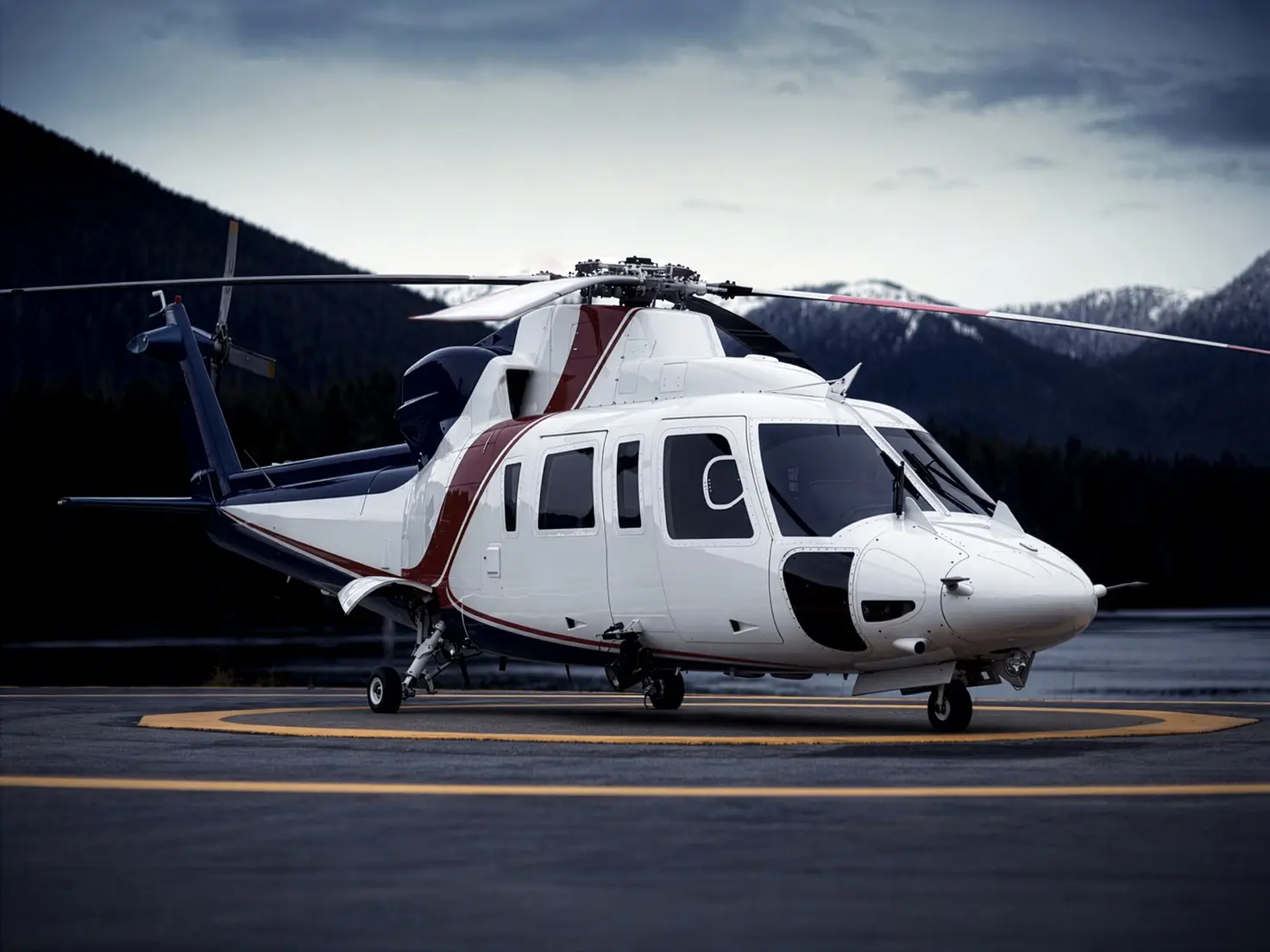
The Sikorsky S-76D VVIP brochure specifies 38 cubic feet, or 1.1 cubic metres, of baggage space. It describes the compartment as pass-through. That term does not establish a walk-in hold, heating or unrestricted access during flight. An itinerary that says only S-76 has not established that it offers the same variant or interior.
There is an easy measurement trap in the brochure. Its 37.5-inch-wide by 52-inch-high door dimensions describe the passenger door. They do not establish the baggage opening. Do not send a rigid case based on that doorway figure and expect the baggage compartment to accept it.
Ask for the baggage loading opening separately, especially for a musical instrument or a case that must stay upright. If it cannot be tilted, say so. A large internal volume is of little use to an item that cannot follow the accepted loading path into it.
For an executive group, include everyone’s bags in the same assessment. Do not obtain separate informal approvals from different booking contacts and assume they can be added together. The carrier needs one complete load description for the aircraft it will send. A change from a soft bag to a larger hard case calls for a fresh answer, even if both weigh the same.
Leonardo AW139: more published space, with configuration questions left
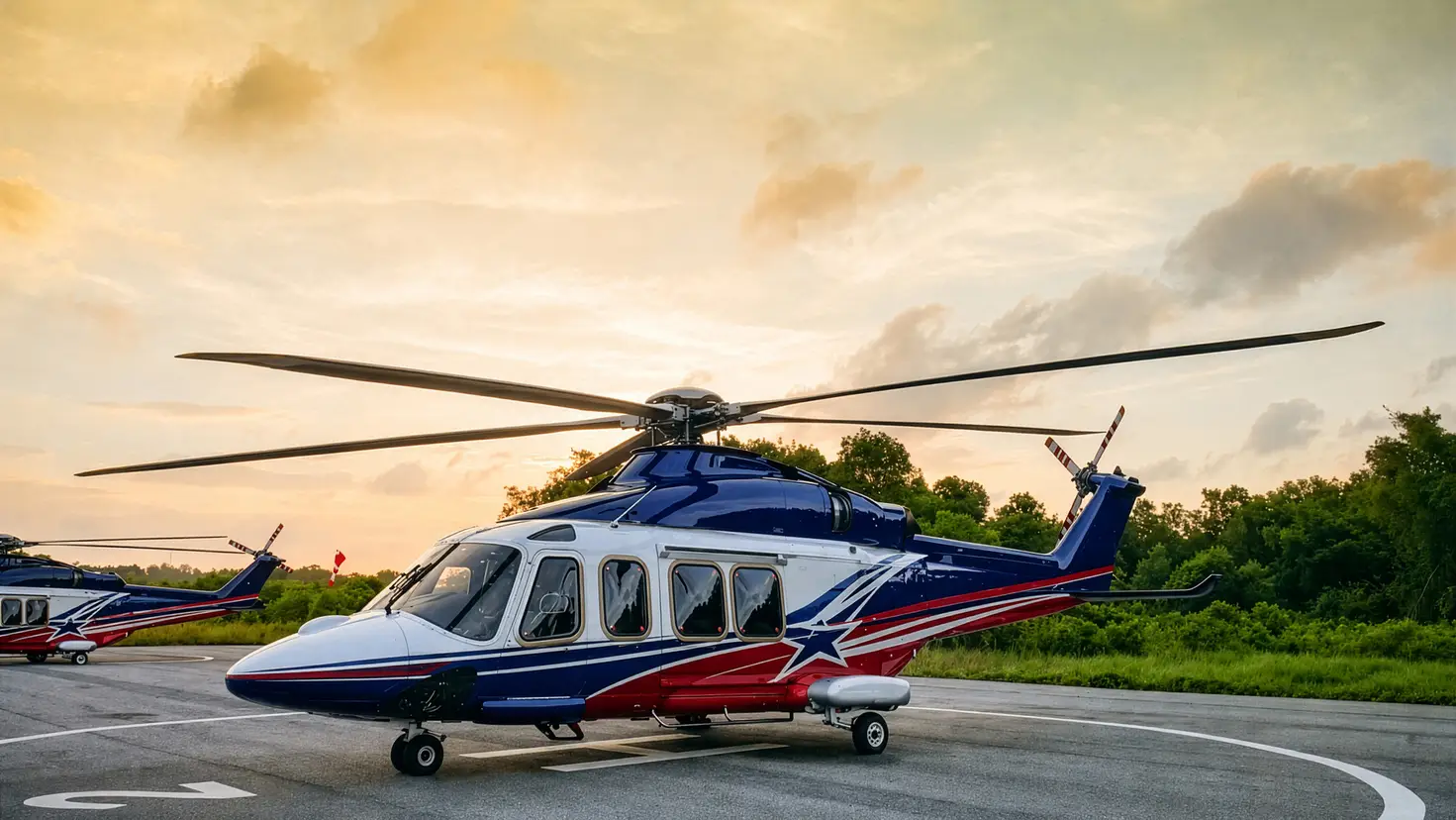
Leonardo’s AW139 Energy Services brochure lists 3.4 cubic metres, or 120 cubic feet, of baggage volume, with exterior access from both sides. An Energy Services specification does not identify the installed interior on a particular executive charter aircraft. Confirm that aircraft’s arrangement with the carrier.
Exterior loading access also does not establish that a passenger can reach a bag during flight. Ask where items needed during the journey will be stowed and whether access is available under the company’s procedures. Do not pack medication or another essential item into a hold on the assumption that you will retrieve it after departure.
The brochure’s volume gives the AW139 a much larger published baggage figure than the 407GXi or S-76D figures above. It still does not prove that a specified set of large cases will fit, or that the full party and its bags can travel on your route. Obtain the baggage weight limits and accepted loading arrangement for the assigned helicopter.
For a group with substantial equipment, compare the complete movement rather than the model name alone. Ask whether everyone and every case can travel together on the proposed leg. If the answer depends on a different interior or a changed itinerary, put that condition into the confirmation before anyone leaves for the departure point.
The measurements that settle whether your case fits
Measure the packed item the crew will receive, including fixed handles and wheels. Record the units explicitly. A suitcase sold by its nominal size may have outside dimensions that differ from the label, while an instrument’s protective case can be substantially larger than the instrument itself.
For soft luggage, report the size when packed. A bag that folds flat in a shop photograph may become rigid once you fill it. Read the soft-luggage comparison before replacing a case; flexibility helps with shape, but it does not remove weight limits.
Give unusual items their own line in the request. A golf bag has a long end-to-end dimension. A framed object may require a fixed orientation. The company needs those details before deciding how the item can be loaded and secured. Document special handling requirements alongside the case dimensions.
Ask for the narrowest clear opening, not an exterior door-panel measurement. Then ask about the internal space and the loading path. A single width and height can be insufficient where the item must turn before it reaches its stowage position. The carrier should assess that maneuver; a traveler should not have to improvise it beside the aircraft.
Confirm one bag plan for every leg
Send a short load record through the booking contact to the operating company:
- Passenger count and the weight information the carrier requests.
- Number of bags, with each bag’s packed outside dimensions and weight.
- Photographs of rigid, unusually long or delicate items.
- Any restriction on tilting, opening or separating a case from its owner.
Request acceptance for the named aircraft and configuration, including any conditions. If a substitute helicopter is proposed, send the same record for review again. Acceptance on an AW139 does not establish acceptance on an S-76, and a broader aircraft category does not identify a particular hold.
Check the return leg too. Extra shopping, event materials or a different passenger group can change the load. For a private-jet connection, compare what arrives on the jet with what the helicopter has accepted. The jet’s baggage allowance does not transfer automatically to the helicopter.
Where the carrier cannot accept everything, decide which property goes by road and who receives it. Confirm the handover before departure. Avoid solving a fit problem by leaving an unidentified case at the landing point or assuming another vehicle has space for it. Record that handover in the charter planning checklist.
Frequently Asked Questions
How much baggage does a Bell 407 carry?
Bell’s 407GXi specification lists 16 cubic feet of baggage space and a maximum baggage weight of 250 pounds. Those are compartment specifications, not a guaranteed allowance for a charter flight. Ask the carrier to accept your complete passenger and bag load for the assigned helicopter and route.
Is the H130’s published cabin volume its luggage capacity?
No. Airbus labels the 3.70-cubic-metre figure as cabin internal volume excluding the pilot’s area. Obtain the actual baggage-compartment details and load limits from the operating company. Do not use cabin volume or useful load as a substitute for those figures.
Will a case fit through an S-76 baggage door if it fits the brochure’s passenger-door dimensions?
That has not been established. The S-76D VVIP brochure’s 37.5-by-52-inch dimensions describe the passenger door. Confirm the baggage opening and the full loading path separately, using the case’s final outside dimensions and any restriction on tilting it.
Can you reach the AW139 baggage compartment from the cabin?
Confirm the assigned aircraft’s access arrangement and the operating company’s procedures. The Energy Services brochure’s exterior access from both sides does not establish passenger access from the cabin. Keep essential items in an accepted location rather than relying on access you have not confirmed.
Does more baggage volume mean the helicopter can carry more luggage weight?
Volume alone does not establish an allowable weight. The compartment’s limits and the aircraft’s flight-level loading assessment still apply. A large, light item can fail the fit check, while a small, heavy case can create a different loading problem. Send both measurements and packed weight.
Glossary
- Baggage volume
- The published amount of space in a baggage compartment, usually expressed in cubic feet or cubic metres. It does not describe every opening or internal dimension.
- Clear opening
- The usable space through which a bag must pass, distinct from the outside dimensions of the door panel.
- Useful load
- A weight available for the aircraft’s operating load under the applicable specification. It is not a baggage-only allowance.
- Configuration
- The installed equipment and interior arrangement of the particular helicopter, rather than the model name alone.