
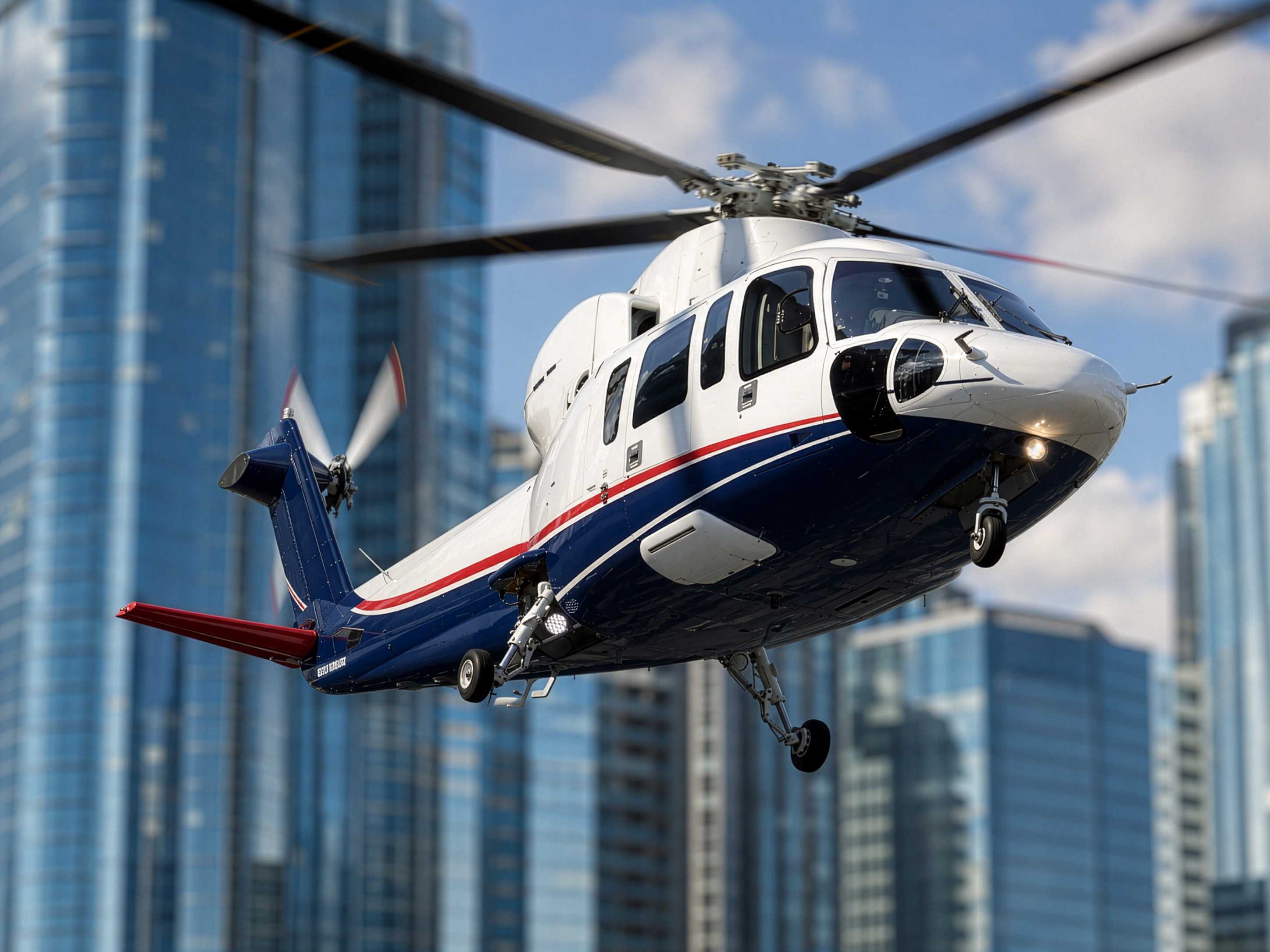
Charter market
NewYorkCity
About This Market
New York City is the most developed helicopter charter market in the United States. No other metro combines this much vertical infrastructure, this much demand, and this much reason to avoid the ground. Three public heliports sit on the Manhattan waterfront, the region’s airports ring the city at distances that make ground times wildly unpredictable, and a large population of travelers has both the schedule pressure and the budget to fly over the problem.
Demand comes from three directions. Airport transfers connect JFK, Newark, and the region’s other airports to Manhattan in minutes instead of an hour or more in traffic, and they form the market’s backbone. Corporate and VIP movement fills the weekdays: executives, deal teams, and public figures moving on schedules that cannot absorb a bridge or tunnel delay. And from late spring through early fall, the seasonal Hamptons flow adds a weekend rhythm of its own between Manhattan and the East End of Long Island.
The customers are executive assistants, corporate travel planners, family offices, and private individuals, many of them repeat buyers who treat the helicopter as standard logistics rather than a luxury. Charter here operates under FAR Part 135, the federal framework for on-demand air carriers; what that means for you is covered in FAR Part 135 for Charter Customers in Plain-English.
Heliports and FBOs
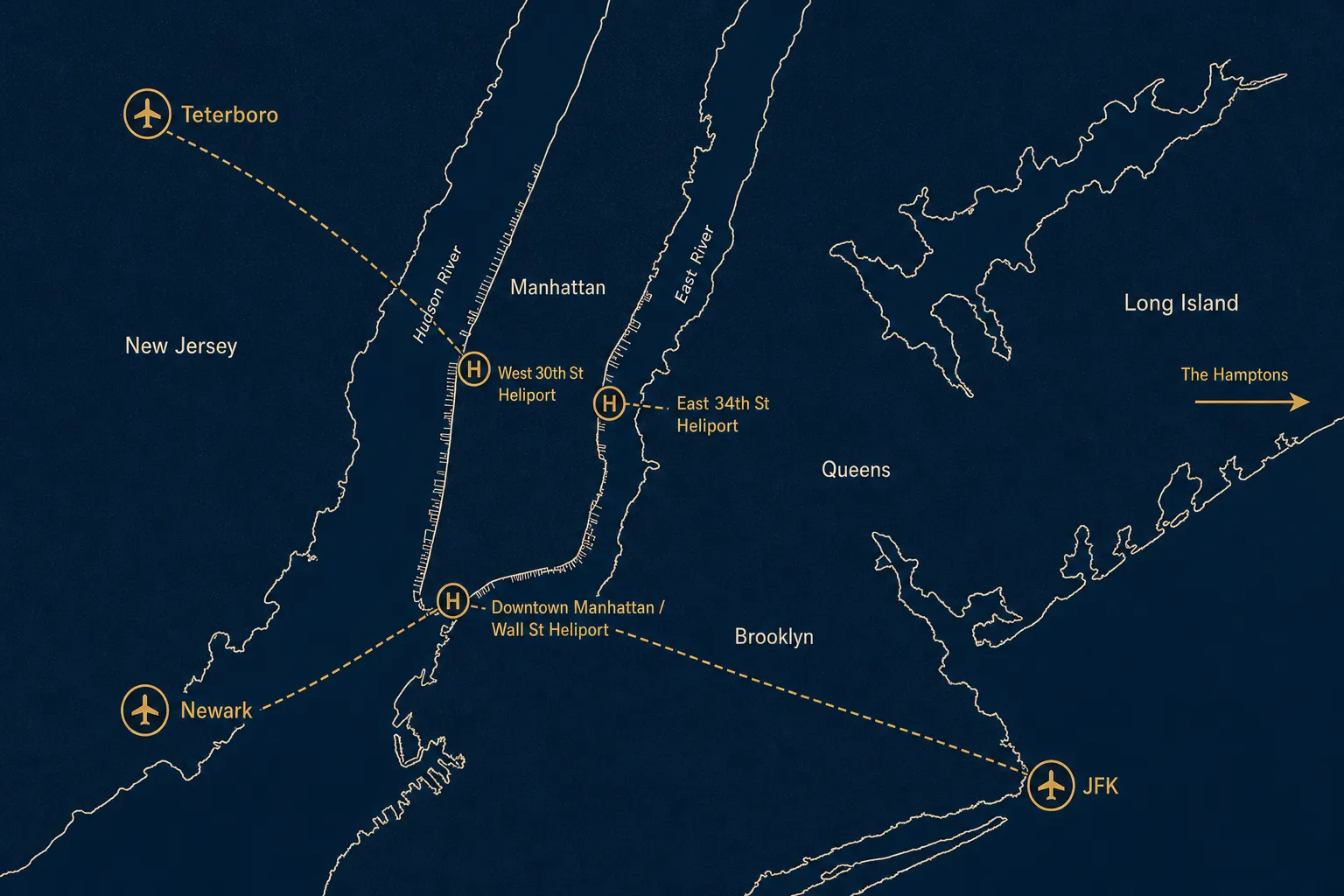
Manhattan has three public heliports, all on the waterfront, and each serves a different part of the island:
- Downtown Manhattan / Wall Street Heliport, at the southern tip of the island, serves the financial district and is the natural arrival point for lower Manhattan business.
- East 34th Street Heliport, on the East River, serves midtown. It carries weekend and noise-related restrictions, and those hours change often enough that an operator confirms them for your date rather than quoting them from memory.
- West 30th Street Heliport, on the Hudson River, serves the west side of midtown and the Hudson Yards area.
All three operate under access and noise-related constraints that are stricter than most visitors expect. Operating status, tenant operators, reservation requirements, and permitted hours all move over time, so the answer that applied to a flight last year is not the answer for yours.
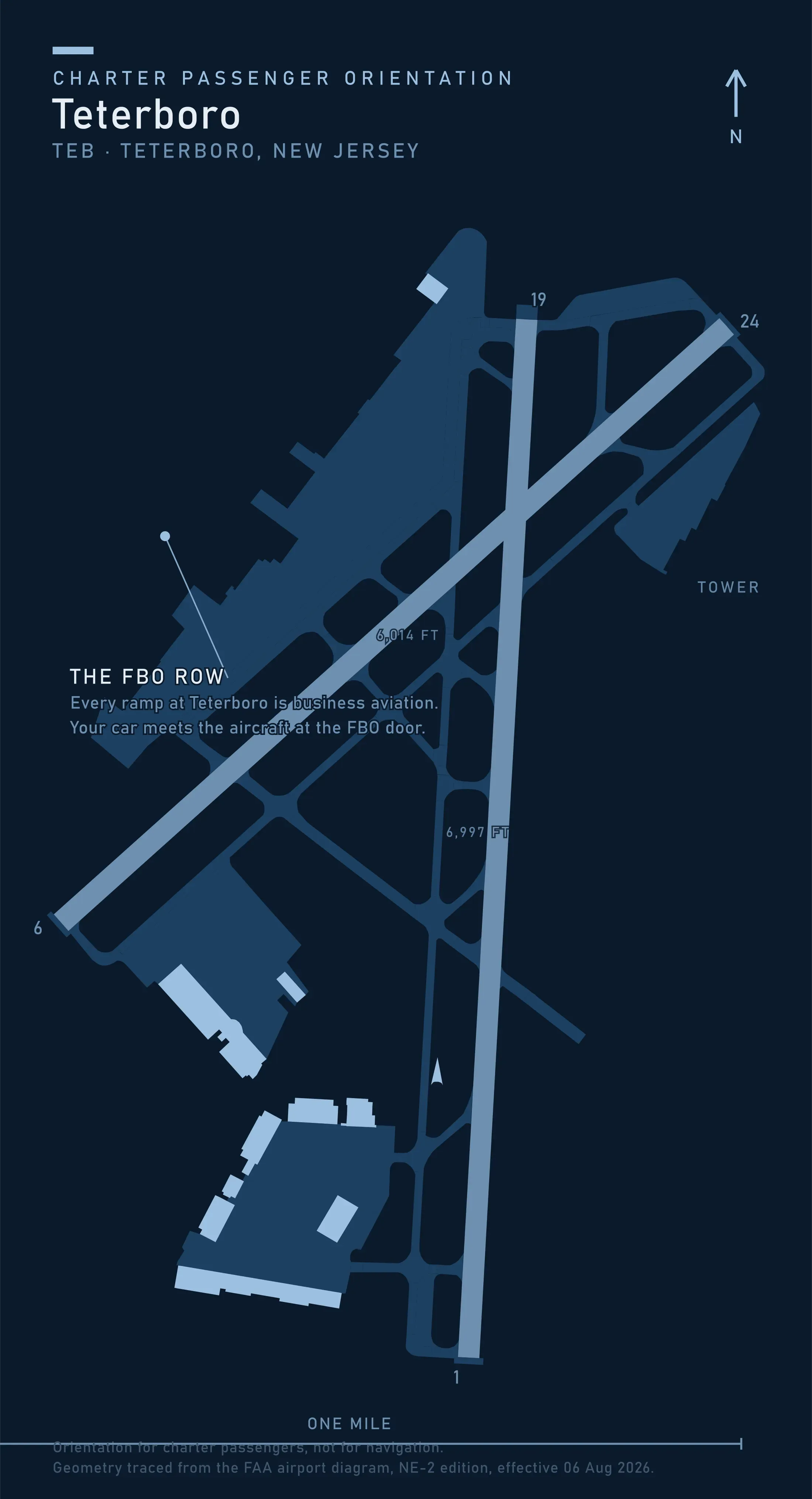
Across the Hudson, Teterboro Airport in New Jersey is the region’s business-aviation hub and one of the busiest general aviation airports in the country. Most private jet arrivals bound for Manhattan land at Teterboro, and the helicopter connection from its ramp to a Manhattan heliport is one of the most flown charter legs in the market. Several FBOs operate on the field, and which one you use is usually decided by whoever handles your inbound aircraft rather than by you.
At the airline airports, helicopter operations work through the general aviation side. JFK and Newark both handle charter helicopters through their general aviation facilities, with the specific ramp or pad depending on the operator. The pattern follows Airport Transfers: you clear the airline terminal, move to the FBO, and lift from there.
Typical Routes and Flight Times
Four corridors define most of the flying in this market. Each exists to replace a ground leg whose travel time is long, unreliable, or both.
- JFK to Manhattan. The classic airline connection, crossing Queens and Brooklyn or routing up the East River to the Manhattan heliports. The flight is measured in minutes; the drive it replaces routinely runs an hour or more, and much more when the tunnels are backed up.
- Newark to Manhattan. A short hop across the Hudson, usually to the Downtown or West 30th Street heliport, replacing a drive whose length depends entirely on the hour.
- Teterboro to Manhattan. The business-aviation connection, down the Hudson corridor to the west side heliports. It is the shortest of the four and the most routinely flown.
- Manhattan to the Hamptons. The seasonal eastbound run along Long Island, covered on The Hamptons & Long Island market page. The helicopter turns a drive that can consume most of a summer Friday into a flight measured in tens of minutes.
New York airspace is among the most complex in the country, and temporary flight restrictions can affect operations with little notice, particularly around major events and VIP movements. A special flight rules area governs transit along the Hudson River corridor, with its own altitude structure and reporting procedures that pilots follow as routine. The wider rules on where helicopters can land are in Heliports & Landing Zones.
Seasonal Patterns
The market has two rhythms layered on top of each other. The year-round baseline is corporate: weekday airport transfers and executive movement that tracks the business calendar, peaks around the morning and evening arrival banks, and quiets on weekends and holidays. On top of that sits the summer outflow. From roughly Memorial Day to Labor Day, Friday afternoons and Sunday evenings bring a surge of traffic between Manhattan and Long Island’s East End, and availability on peak summer weekends tightens well in advance.
Weather shapes both rhythms. Winter brings icing and low ceilings that can ground helicopters on days the airlines still fly. Summer brings afternoon thunderstorms that can hold traffic on the very weekends demand peaks. Neither makes the market unreliable; both mean a serious plan keeps a ground fallback for the trips that truly cannot slip. Day-of weather mechanics are covered in Weather, Delays & Scheduling FAQ.
Which Charter Types Dominate Here
Airport transfers are the market’s foundation. The JFK, Newark, and Teterboro connections described above are the highest-volume helicopter charter legs in the region, booked mostly by assistants and travel planners working backward from meetings that cannot start late. How a transfer works end to end: Airport Transfers.
Corporate and executive travel extends the same logic beyond the airport leg: point-to-point movement between heliports, suburban offices, and sites across the region, often recurring on a weekly cadence. See Corporate & Executive Travel.
VIP and discreet travel thrives here because the heliports and FBOs support low-profile handling: private lounges, ramp-side vehicle access, and arrival away from public terminals. See VIP & Discreet Travel.
Related Pages
- Destinations: the other US charter markets and what defines each one.
- The Hamptons & Long Island: the other end of the summer corridor.
- Chicago Lakefront: the other city built as a wall, seen from the water rather than from inside it.
- Airport Transfers: the highest-volume charter in this market, end to end.
- Corporate & Executive Travel: the recurring weekday flying the region runs on.
- VIP & Discreet Travel: why the region’s FBOs suit low-profile movement.
Heliports near New York City
The FAA records 150 heliports within 50 miles of New York City in the current cycle. Four are public use; the rest start with the owner’s permission. Your operator makes that arrangement before the flight is confirmed.
Heliports only. Airports are a separate class of facility and are not counted here, and in many markets the charter itself works from one.