
Scenic&SightseeingCharters
What This Charter Is
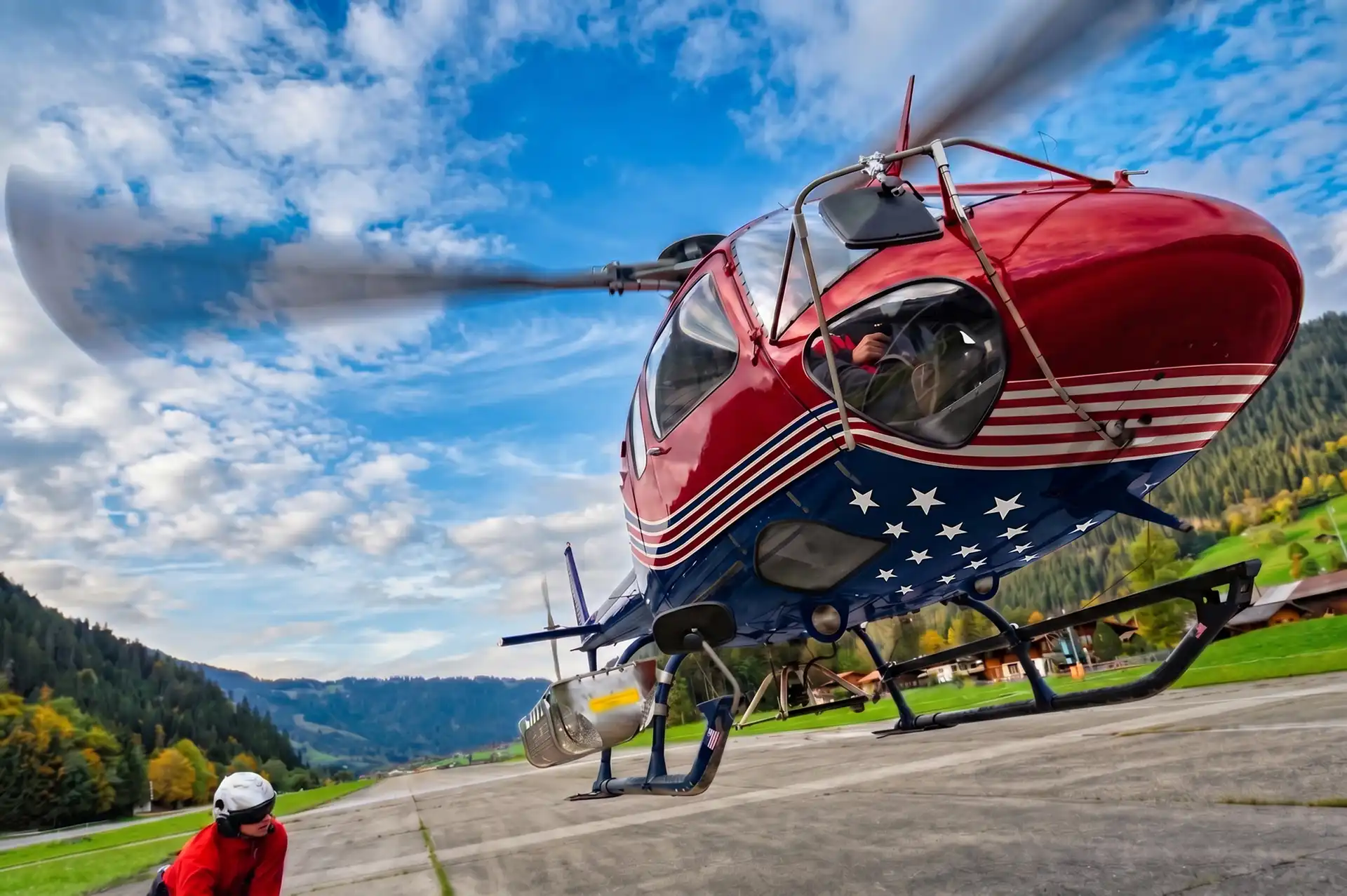
A scenic charter is the simplest, happiest arrangement in leisure flying: you hire the entire helicopter, with a professional pilot up front, to go look at a place from the air. The coastline you have driven a hundred times. The ridge you have only ever seen from the trailhead. Your own skyline at golden hour. You and the operator agree on the route, the duration, and the departure point before the flight, and the only people in the cabin are the pilot and your party. The flight operates under FAR Part 135, the federal framework for on-demand air carriers, explained from the customer’s side in FAR Part 135 for Charter Customers in Plain-English.
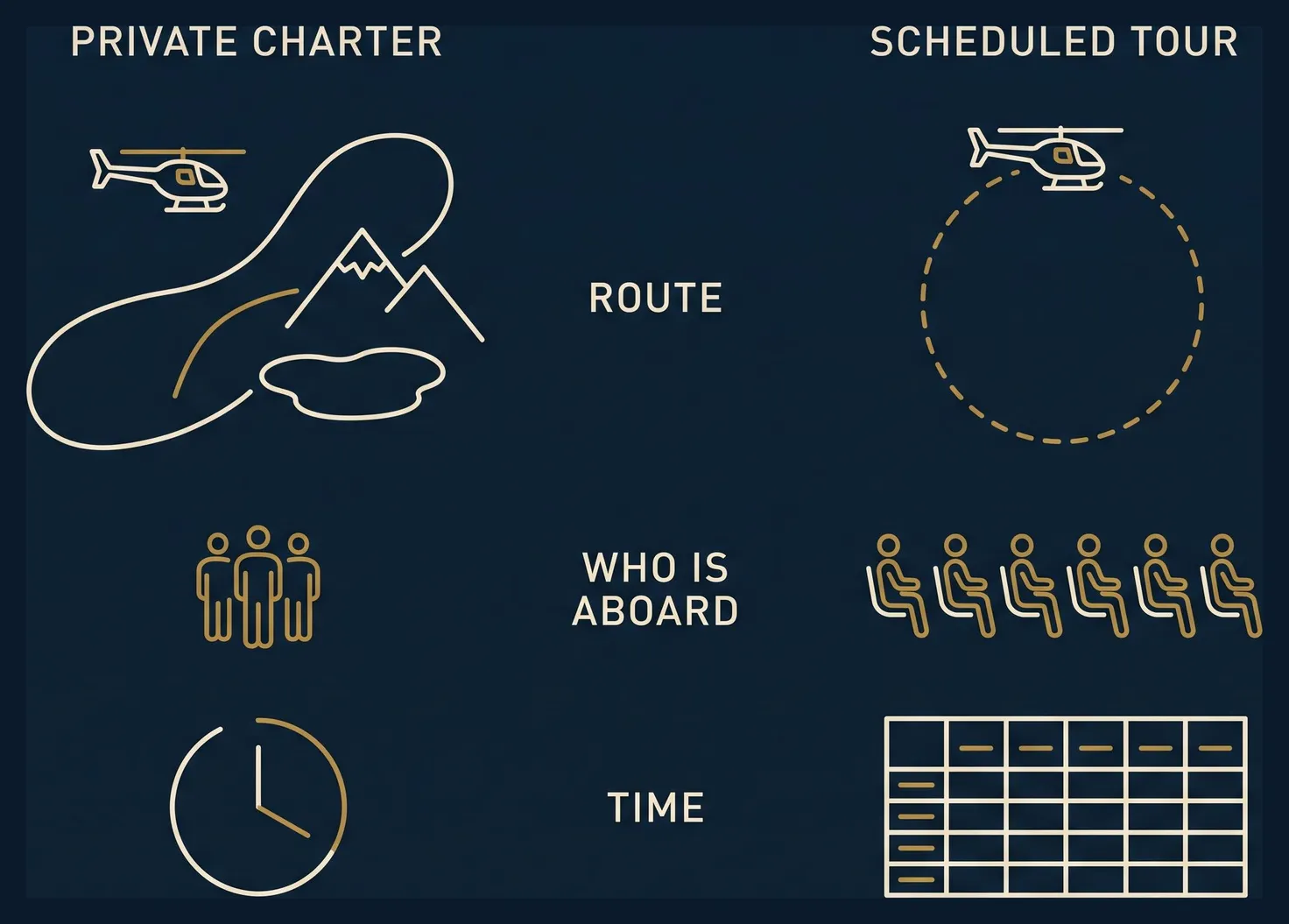
That is a different animal from buying a seat on a scheduled sightseeing tour, and the difference is the whole point. A tour sells individual seats on a fixed route at fixed times: you share the cabin with strangers, the route does not bend for you, and the flight leaves when the tour company says so. On a charter, the aircraft is yours for the booked time. You bring the wish list, the pilot brings the judgment about what the clock and the airspace will allow, and together you settle on a route that fits the agreed duration.
Who Uses It and Why
No other leisure charter draws a wider crowd. Couples sharing a view they cannot get from the ground. Families making the flight itself the outing. Visitors marking a trip with a first look at a coastline, mountain range, or skyline from the air. Locals discovering what their own backyard looks like from above. Amateur photographers reaching positions no roadside overlook offers. What they all want is the same happy thing: their route, their timing, their people.
How a Typical Flight Works
The booking conversation. It starts with two questions: what do you want to see, and how long do you want to be up? The operator proposes route options from their departure points. Most scenic charters take one of two shapes: a loop out and back to the same site, or a point-to-point leg where the scenery is the route.
Route planning with the pilot. This is where a wish list becomes a flight plan. The binding constraints are time and fuel, not imagination: every minute in the air is on the meter, so the agreed duration decides how much scenery fits. A good operator tells you plainly when a route asks for more than the booked time can deliver, and suggests what to drop.
Altitude and airspace. Scenic flying happens inside real rules, and they are worth a minute of your attention. FAR 91.119 sets minimum safe altitudes: over a congested area, 1,000 feet above the highest obstacle within a 2,000-foot horizontal radius; elsewhere, 500 feet above the surface, and over open water or sparsely populated country, no closer than 500 feet to any person, vessel, vehicle, or structure. Helicopters get an explicit exception and may fly below those figures where the operation creates no hazard to people or property on the ground, which is why a helicopter can show you things a fixed-wing sightseeing flight simply cannot. Controlled airspace can require a clearance or a set routing, temporary flight restrictions can close airspace near stadiums, major events, and VIP movements, noise-sensitive areas add informal limits, and sightseeing over some national parks carries its own restrictions. The pilot and operator have the final say, and a reroute on the day is normal, not a failure.
Photography from the cabin. If pictures are the point, say so at booking. In a light helicopter every passenger sits at a window, and operators can often tell you which seat suits the route best. Shooting through curved plexiglass means managing glare and reflections: dark clothing helps, and a fast shutter speed tames the vibration. Some operators offer doors-off flying for photography under their own rules, so ask rather than assume. Smaller aircraft and fewer passengers help too: less glass between you and the view, more freedom for the pilot to position for the shot.
Aircraft Typically Used
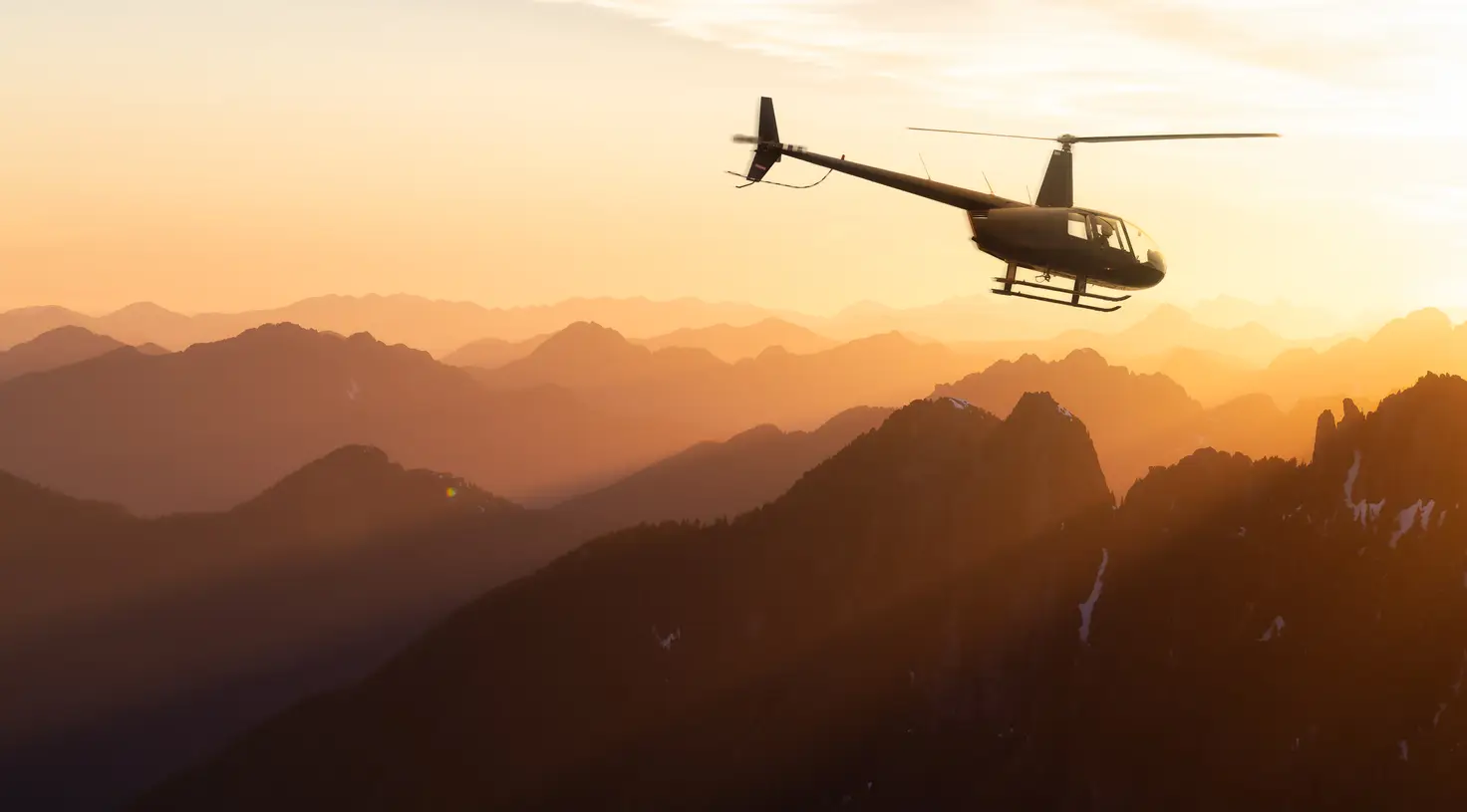
Light single-engine helicopters do most of the scenic work, and for good reason. The Robinson R44 and R66 class carries a pilot and three or four passengers depending on the model; the Airbus H125 and H130 class seats more in a wider cabin with a broad forward view, and both turn up constantly on sightseeing work. In a light single every seat is effectively a window seat, and a group too large for one aircraft simply books two and flies the route in loose company. Class trade-offs in charter terms are laid out in the Helicopter Class Comparison Guide.
Planning Considerations
Weather
A scenic flight is a fair-weather creature: if the ceiling is low or the visibility poor, the view you booked simply is not there. Operators will not fly below their minimums, and most treat a weather cancellation as a reschedule rather than a lost booking, so flexible dates are worth more here than on a transfer. Seasonal patterns are covered in Weather, Delays & Scheduling FAQ.
Departure and Landing Sites
Scenic charters typically depart from an airport, a heliport, or an established landing site near the scenery. Some itineraries add a landing stop at a lakeside site, a ranch, or an overlook property where the operator has permission, which can turn a flight into a whole afternoon. Where helicopters can legally set down is its own subject; see Heliports & Landing Zones. Confirm the departure point when you book; it shapes both route and cost.
Luggage and Passengers
Bring almost nothing; the view does not require luggage. Scenic charters are short and light helicopters are weight-sensitive, so the operator will ask for honest passenger weights at booking. Cameras and phones are welcome; loose items get secured before startup. If anyone in the party is nervous about flying, say so; a shorter first flight is an easy adjustment.
Lead Time
A few days to a couple of weeks covers most bookings, though good-weather weekends and holidays fill early in popular areas. If the trip allows, give the operator a weather window rather than one fixed day; the scenery will wait for you.
When a Helicopter Is the Wrong Answer
If the viewpoint has a road to it, drive. If your party is one or two people happy with a standard loop on a set schedule, a per-seat tour does that job for less money. And if the dates cannot move and the forecast is grim, no charter fixes the weather. A scenic charter earns its cost when you want the aircraft to yourselves, a route built around what you care about, or a landing stop that turns the flight into the day.
Cost Factors
The variables behind any charter quote are laid out in What a Charter Costs: Framework, Not Quotes. The drivers here are flight time, since the meter runs for the agreed duration; aircraft class, since a wider-cabin aircraft costs more per hour than a light single; positioning, if the helicopter has to travel to reach a scenic departure point; any landing fees tied to a stop; and group size, since the aircraft costs the same whether two seats or four are filled, which makes a fuller cabin better value per person.
Frequently Asked Questions
Can we choose our own route?
Yes, and that is most of the fun, within limits. You bring the priorities; the pilot advises on what fits inside the agreed time, the fuel, and the airspace. The final route is a joint decision, and the pilot has the last word.
Is a charter the same as a helicopter tour?
No. A tour sells individual seats on a fixed route and schedule, shared with strangers; a charter gives your party the whole aircraft, with route and duration agreed in advance.
Can we fly with the doors off for photography?
Some operators offer doors-off flying under their own rules; it is the operator’s call rather than a standard option, so ask when you book.
How many people can come along?
It depends on the aircraft and the total weight: light singles typically carry three or four passengers, and wider cabins carry more. Larger groups book multiple aircraft and fly the route together, which has a charm of its own.
What happens if the weather cancels our flight?
It moves to another day or time, per the operator’s policy. On a scenic charter a cancellation is an inconvenience rather than a disaster, and rebooking is routine.
Related Charters
- Special Occasions & Proposals: the flight marks a specific event.
- Golf & Resort Charters: flying to a course or resort rather than for the view.
- Winery & Restaurant Charters: a scenic leg that ends at a table.
- Sporting Events & Concerts: beating event traffic to and from a venue.
- Weekend Getaways: the helicopter as the start of a short trip, not the whole point.
- Leisure & Recreational Charters: how the leisure charters differ and which one fits your occasion.