
Family Travel · October 14, 2026 · 12 minute read
Canyoubringastrolleronahelicoptercharter?
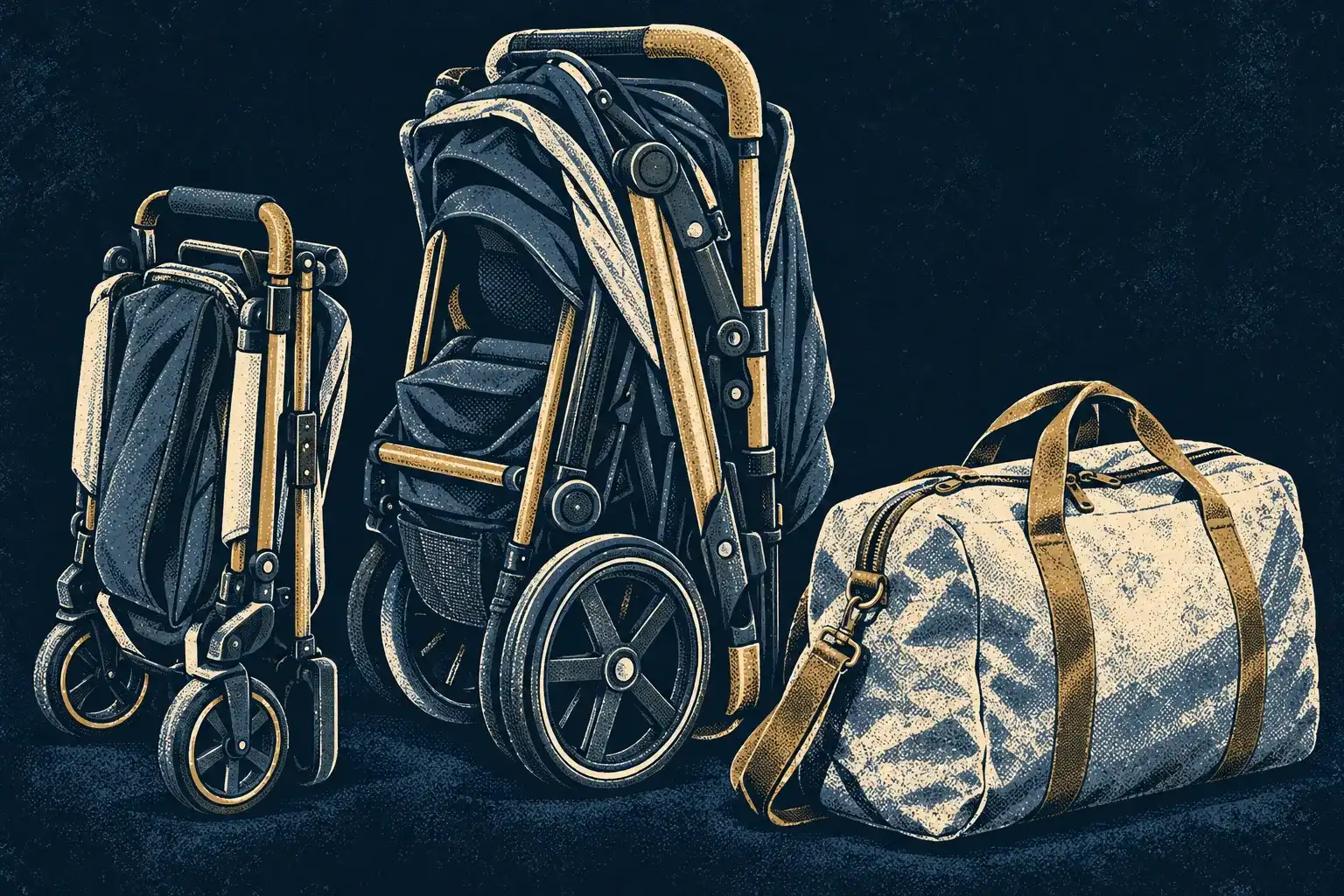
You can bring a stroller on a helicopter charter if its folded shape fits the assigned aircraft’s baggage arrangement and the complete load stays within limits. Send the operator its folded dimensions and weight before booking. Your child’s seating is a separate check: confirm an appropriate restraint and a compatible aircraft seat. Space for a folded stroller does not establish that a car seat can be installed.
Measure the stroller after you fold it
A stroller’s airline carry-on label is not a helicopter baggage allowance. Measure the actual folded frame, including anything that sticks out. Wheels can be the widest part. A handle or a rigid carry case can make the packed item longer than the manufacturer’s basic folded dimensions suggest.
Take a photograph of the stroller in the configuration you intend to hand over. If it folds only after you remove a seat unit, describe both pieces. If you plan to detach the wheels, include the resulting wheel bag in the count. The operator needs the complete load rather than the smallest possible measurement of one component.
A compact folding stroller is usually an easier shape to work with than a full-size pram. That does not create a guaranteed fit. The baggage opening may be smaller than the compartment behind it, and the frame still needs a loading path that does not require force. A double stroller deserves its own discussion even if the family has taken a similar single stroller before.
Give the operator the measurements with your passenger details, not after the aircraft has been selected. Ask where this stroller would ride on that helicopter. The answer might be an enclosed baggage compartment or another compliant cargo arrangement. “We carry baby gear” is too broad to settle the question.
The charter planning checklist puts luggage into the initial inquiry for this reason. On a family trip, the stroller may determine the useful baggage space more than the adults’ overnight bags do.
Count the equipment that travels around the stroller
Set out everything you expect to bring before sending the list. A stroller can arrive with a detachable bassinet, a travel cover and an organizer full of small items. Those parts have to go somewhere too. A cover may protect the upholstery while adding enough bulk to change the fit.
Keep the list simple and specific:
| Item | Details to send | Question to settle |
|---|---|---|
| Folded stroller | Outside dimensions, weight and a photograph | Where does the complete folded item ride? |
| Child safety seat | Exact model, approval labels and instructions | Can it be used in an appropriate seat on this aircraft? |
| Travel cot | Packed dimensions and weight | Does it fit alongside the rest of the luggage? |
| Small supplies bag | Packed size and what you need during flight | What may stay accessible in the cabin? |
| Other family luggage | Each bag’s packed dimensions and weight | What is the combined accepted load? |
Avoid treating the child’s equipment as an extra allowance. A travel cot and a stroller are cargo even when the passenger who needs them is small. The child’s weight also belongs in the passenger information. Do not omit an infant from the loading discussion because you have read about a lap-child exception.
The luggage weight and balance limits apply to the whole group. A bag that fits physically can still exceed a compartment limit, or leave too little payload for the rest of the flight. The operator and pilot make that calculation for the assigned aircraft.
A stroller is baggage, not an aircraft seat
Plan to fold and hand over the stroller where the crew directs. Do not plan to leave a child in it during flight. A familiar harness in a stroller does not establish an approved aircraft restraint or a way to secure the stroller itself.
For U.S. Part 135 flights, section 135.87 governs cargo and carry-on baggage. It provides for approved stowage or securing arrangements, or carriage under its specified cargo conditions. Those conditions address restraint against movement and keeping required exits and aisles clear, among other limits.
That is why an empty patch of cabin floor is not a baggage plan. Ask the crew to identify the accepted location. A folded stroller leaned against a door, or a heavy frame held by an adult, does not answer the restraint question. An empty passenger seat does not automatically make every object suitable for carriage there either.
Tell the operator if your stroller has a powered component or a removable battery. Have the battery information available and ask how it must be carried. Do not assume that removing it from the frame resolves all handling requirements. The operator needs to assess the actual equipment.
If a stroller doubles as part of a travel system with a detachable infant seat, describe each mode separately. Approval to use the infant seat does not approve the wheeled frame. Equally, accepting the folded frame as baggage does not establish approval for the infant seat.
Give the child a confirmed seating plan
Under 14 CFR 135.128, a child who has not reached a second birthday may be held without a restraint device by an adult occupying an approved seat or berth, subject to an important exception. Section 91.108(j) prohibits this when the aircraft’s doors are open or removed, or the adult uses a supplemental restraint system, an additional tethered harness. Do not apply the ordinary lap-child exception to a doors-off flight.
The FAA’s child-safety guidance for airplane travel strongly recommends an approved child restraint in the child’s own seat throughout the flight. For a helicopter trip, arrange a compatible child restraint and a dedicated seat with the operator before departure.
For your charter, ask for that seat in the initial request. Be explicit that it is for the child and a suitable restraint, rather than an assumed spare seat. You are reserving a whole aircraft, but its seating layout and permitted loading arrangements still matter.
For children outside the under-two exception, do not plan on lap carriage. Establish the appropriate approved seat and restraint arrangement with the operator. Age alone also does not establish whether a particular child restraint fits: its manufacturer sets size and use limits.
The same rule addresses parents bringing a child restraint system, often abbreviated CRS. When the conditions in section 135.128(b)(2) are met, the operator may not prohibit its use at the parent’s request. Those conditions include a seat made available for the child, the required approval markings and proper use. The operator may determine the appropriate passenger-seat location consistent with safe operating practices.
The rule protects a qualifying installation. Resolve the approval and fit requirements before travel. If there is a disagreement, ask which requirement the proposed arrangement cannot meet, and request review by the person responsible for passenger-restraint procedures.
Check the label and the aircraft installation separately

For a modern child seat made to U.S. standards, section 135.128 specifies the motor-vehicle conformity label and a separate certification statement for use in motor vehicles and aircraft. Photograph the actual labels on your seat. A retailer’s description saying “travel friendly” does not supply them. The regulation also recognizes other approval routes, including appropriately marked foreign-government or United Nations standards and specified FAA approvals.
Approval markings are one check. Installation in the assigned helicopter is another. Send the exact model’s instructions, including the aircraft-use section, so the operator can review the required belt path and seating arrangement. Do not assume an airline installation video describes the helicopter’s passenger seat or restraint.
Section 135.128 requires the child restraint to be properly secured to an approved forward-facing aircraft seat or berth. Here, “forward-facing” describes the aircraft seat. The FAA’s child-restraint guidance, AC 120-87C, explains that the child restraint faces the direction specified for the child’s size by its label. Do not turn a rear-facing infant seat around just to make it look like the helicopter’s seat faces.
Ask the operator which passenger position will be used and whether the restraint can be installed according to its instructions. A helicopter may have a different seat layout or belt arrangement from the airplane you used last week. The aircraft class comparison helps with overall capacity, but a model name alone does not confirm compatibility.
Bring the instructions with the seat. If a base is normally used in your car, check whether the seat’s aircraft instructions call for it or for an installation without it. Do not improvise extra straps or use attachment points that the instructions do not authorize. The operator should resolve an uncertain installation before the family reaches the ramp.
A booster or wearable carrier needs a different answer
A road booster seat is not automatically an aircraft child restraint. Section 135.128 generally excludes booster-type restraints and unapproved vest, harness or lap-held devices from use during movement on the surface, takeoff and landing. It contains exceptions for specified FAA-approved devices. Do not infer that every harness is banned, or that every product with a buckle is approved.
Do not assume an airline CARES harness is approved or compatible for your helicopter flight. The manufacturer’s CARES data sheet describes passenger-installed approval for Part 23 and Part 25 aircraft, which are airplane certification categories. Give the helicopter operator the exact device information and ask it to establish the applicable approval and installation. A general claim of FAA approval is insufficient to settle that question.
A soft baby carrier worn by an adult should not be presented as an approved flight restraint. Ask the crew about its permitted use and when the child must be in the accepted seating arrangement. Keeping hands free in a terminal and restraining a child for aircraft movement are different jobs.
You may still need a road-only booster at the destination. List it as baggage and arrange a suitable road restraint for the onward drive. An aviation-only device does not establish suitability for a car. Plan both legs so the flight solution does not leave a driver waiting with the wrong equipment.
Make the ground handoff work for the family
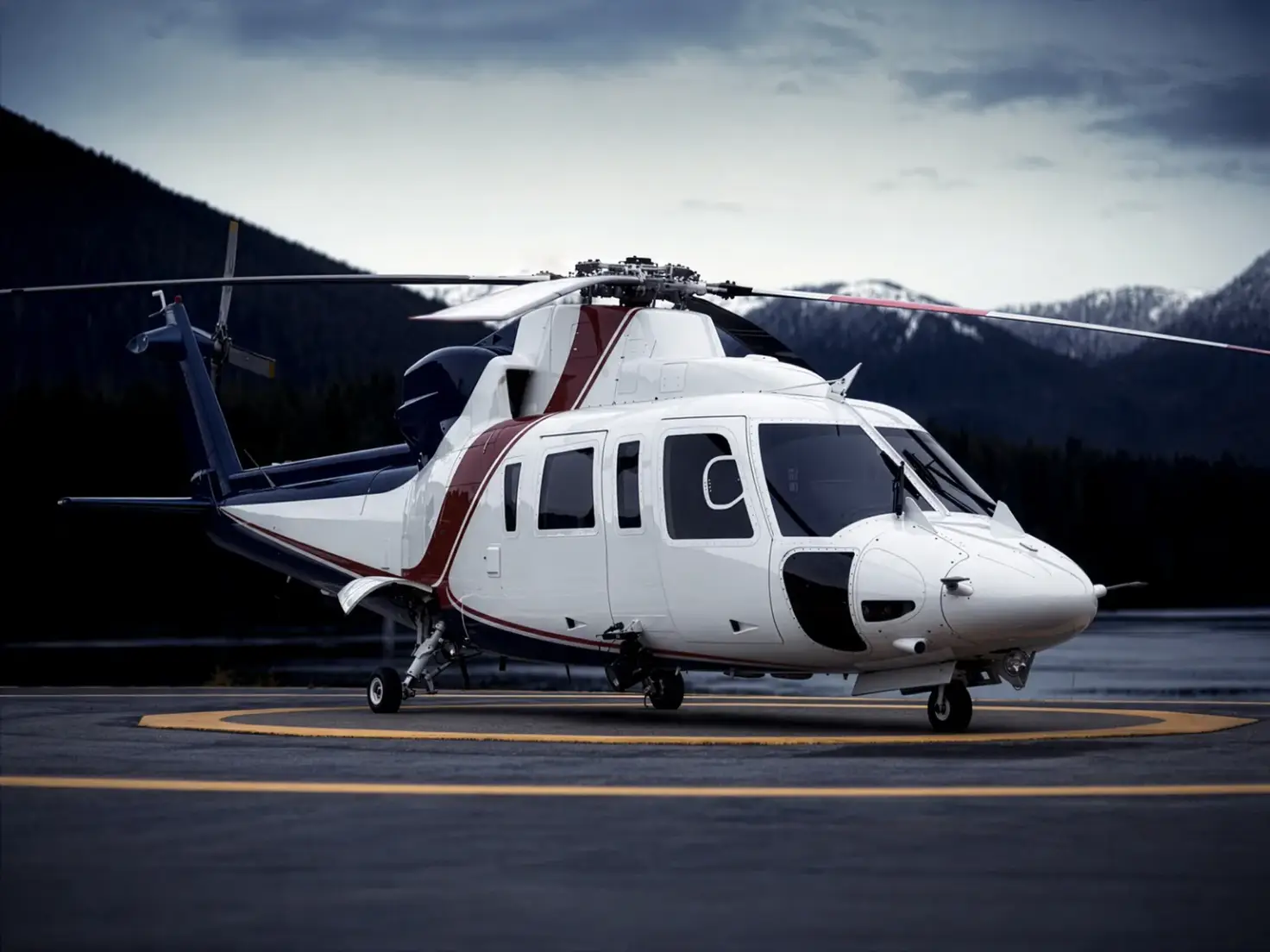
At an airport transfer, confirm where you stop using the stroller and where the crew receives it. The private aviation terminal, often called the fixed-base operator or FBO, may be the practical place to fold it. Ask about the actual handoff instead of assuming an airline-style gate-check service exists.
Name the adult responsible for each child during boarding. Another adult may be busy with the equipment. Follow the crew’s instructions about when to move and which route to take. Do not send a child ahead toward the helicopter while you fold a stroller or retrieve a bag.
Keep essential supplies in the small bag the operator has accepted for the cabin. Ask which items remain reachable once everyone is seated and restrained. A diaper bag loaded into an external hold is not available merely because it contains something you need.
Confirm the receiving end too. Where will the stroller be handed back? Who receives equipment sent by road? If the approved child seat travels in the helicopter, how will it move into the onward car? Work through that sequence before the family arrives, particularly when another person has arranged the destination vehicle.
For a weekend getaway, ask the accommodation whether a suitable cot or stroller is available. Confirm the actual equipment before leaving yours behind. “Family friendly” is not an inventory list.
When sending the larger gear by road makes sense
A full-size pram and a travel cot can dictate the baggage plan for a small family. If those pieces do not fit the accepted aircraft arrangement, consider a separate vehicle for the equipment. Compare that with driving together; a helicopter transfer loses much of its convenience if the essentials arrive too late to use.
Separate transport needs a named receiver and a realistic delivery time. Keep what the child needs before that delivery with the family, subject to the operator’s accepted cabin-baggage arrangement. Do not put the only available child restraint in the equipment car if it is needed for the flight or the first road leg after landing.
If a smaller stroller solves the loading problem, check its packed measurements with the operator before buying or borrowing it. Soft luggage can help the adults use the remaining space, but reducing their bags will not make an oversized rigid frame pass through a narrow opening.
Recheck the plan if the helicopter changes. The new aircraft may have a different baggage door or seating layout. Have the operator reconfirm both the folded equipment and the child-restraint installation. Keep those as separate confirmations in the itinerary so one does not disappear behind the other.
Frequently Asked Questions
Can a compact travel stroller fit in a helicopter?
It may, but its folded dimensions and weight must suit the assigned aircraft and the rest of the load. Send a photograph and measurements before booking. An airline carry-on claim is not a helicopter allowance.
Can my baby stay in the stroller during the flight?
Plan to hand the stroller over as baggage and use the confirmed seating arrangement for the child. A stroller’s harness does not establish an approved aircraft restraint or secure the stroller to the aircraft.
Does a child under two need a separate seat?
Part 135 permits an under-two lap-child exception subject to conditions, including the doors-open and supplemental-restraint restriction in section 91.108(j). Plan a dedicated seat with a compatible child restraint when you first discuss the charter. The FAA’s airplane child-safety guidance also strongly recommends an approved restraint in the child’s own seat throughout the flight.
Can I bring my own car seat?
Yes, subject to the approval and proper-use conditions in section 135.128. Send the exact model, labels and instructions ahead. When the rule’s conditions are met, the operator may not prohibit the parent’s requested use, although it may determine the suitable passenger-seat location.
Can I use the same restraint in the helicopter and the car?
Only if it is approved and suitable for both uses, and can be installed correctly in each. An aviation-only device is not a road restraint. Confirm the onward car arrangement as well as the flight.
What happens if the stroller does not fit?
It cannot fly in an unaccepted loading arrangement. Agree beforehand on a smaller accepted item, ground transport or a revised travel plan. Do not expect the crew to wedge the frame into the cabin at departure.
Glossary
- Child restraint system (CRS)
- A seat or device approved to restrain a child under the applicable aircraft-use requirements.
- Part 135
- The FAA operating rules that govern on-demand commercial helicopter charters and certain other commercial flights.
- Forward-facing aircraft seat
- A passenger seat that faces the aircraft’s direction of travel, distinct from the direction in which a child sits within a restraint.
- Payload
- The weight available for passengers and cargo after the aircraft and required fuel are accounted for.
- FBO
- Fixed-base operator, the private aviation terminal or service provider at an airport where passengers and bags may meet the crew.
- Approved stowage
- A baggage location or securing arrangement accepted under the applicable aircraft and operating requirements.